
Reviewed · OMO VALLEY TOURS
6 Days Lalibela, Omo Valley and Harar
This trip is interesting because you cover three very different Ethiopia regions back to back: rock-hewn Lalibela, village life in the Omo Valley, and the walled Islamic city of Harar. I love the mix of major cultural sights and hands-on village visits, so the days feel like more than a drive-through. I also like that entrance fees and local guide support are built in, which keeps you moving without constant ticket hunting.
One possible drawback to plan for is lodging quality, especially in Harar. In at least one case, the Harar hotel standard was poor, even though other parts of the trip felt well run.
Key highlights you will actually feel
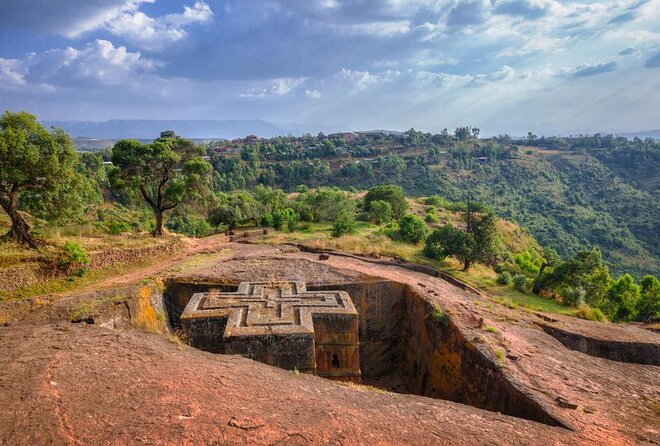
- Bet Medhane Alem and the Lalibela Cross in Lalibela’s Northern Group, with lots of church-to-church connections explained
- Boat time on the Omo River and Lake Chamo, including the crocodile market and a chance to see local hippos
- Konso’s terraces and chief’s compound setup, including family graveyard and house mummies, plus a local museum visit
- Village and market days that focus on people, from Aari and Mursi areas near Jinka to Hamer hair styling and market stops
- Harar’s night and morning rhythm, including the hyena feeding outside the walled city and museum visits the next day
- A private, guided route with an air-conditioned vehicle, plus entrance fees and licenses covered
Lalibela to Harar, one fast-moving loop of Ethiopia’s cultures

What makes this route work is that it does not just hit famous sights. It stitches together faith, farming, trade, and daily life in a tight six-day arc. You start in the north with the Rock-Hewn Churches of Lalibela, then swing south into the Omo Valley region for markets and village communities, and finish in Harar where the old walled city still sets the pace.
I like that the trip has clear anchors. You are not trying to “do everything” without structure. Each day has a few big moments, then supporting visits that explain what you are seeing. That is the difference between a photo tour and a trip that leaves you with context.
Other journeys down to the lower Omo:
- 6 Days Omo Valley Tribes Tours From Addis Ababa
★ 5.0 · 33 reviews - 3 Days Omo Valley Tour
★ 5.0 · 24 reviews - Danakil Depression, Lalibela, Omo Valley and Simien Mountains
★ 5.0 · 23 reviews
Price and logistics: what the $1,538.47 really buys you
At about $1,538.47 per person for roughly six days, this can feel like a lot until you look at what is actually included. You get air-conditioned vehicle transport, local guides, and all entrance fees and licenses for the program. You also get pickup offered, and mobile ticket delivery is listed. Those items matter, because Ethiopia routing can turn into wasted time if the logistics are sloppy.
Still, I would treat the internal flights as the one item you must confirm carefully. The schedule depends on several flights, including a morning hop from Addis Ababa to Lalibela and another flight later in the middle of the trip. In one real-world experience, the internal flights were not booked when expected, even though they were assumed to be covered. So, before you lock anything in, I strongly recommend you ask Ethio Travel And Tours to confirm what flights are booked and ticketed for your dates, not just what appears in the day-by-day plan.
Day 1 in Lalibela: Bet Medhane Alem and the Northern Group overview
Your day begins with an early flight from Addis Ababa to Lalibela, around 7:10 am. After you land, you are met at the airport and driven about 23 km to Lalibela for check-in and a quick reset. Then the church visits begin, and they start with the Northern Group.
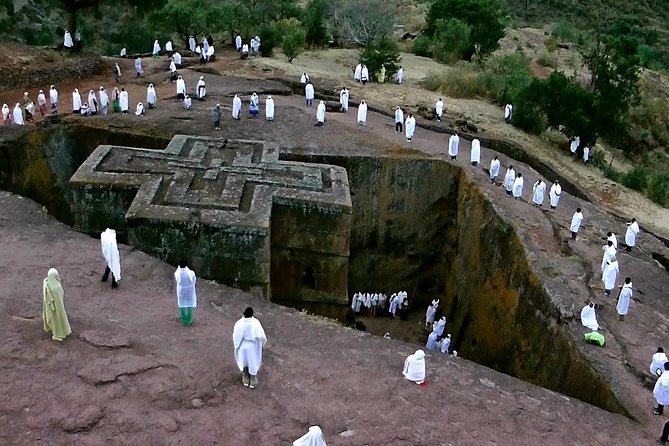
The standout here is Bet Medhane Alem, described as home to the Lalibela Cross. The guide also connects it to a wider story: it is believed to be the largest monolithic church in the world, and it is suggested it may be a copy of St Mary of Zion in Aksum. You then move through related sites around this complex, including Bete Maryam, Bete Golgotha (noted for arts and said to contain the tomb of King Lalibela), the Selassie Chapel, and the Tomb of Adam.
What I like about this first-day focus is that you are not just looking at carved stone. You are getting a map of relationships between buildings. That makes the second cluster easier to understand later, because you already know the terms the guide uses.
A practical consideration: Lalibela days start early, and the church walking can feel repetitive if you are tired. The route includes breaks, but plan to go at a steady pace and keep water handy.
Day 2 in Jinka: the Aari village and an ethnographic museum afternoon
On Day 2 you fly to Jinka, with arrival around 14:10. Once you meet your driver and guide at the airport, it is a straightforward transfer to the hotel. Then you head out in the afternoon for an excursion near Jinka.
The stop is the Aari village area, followed by the ethnographic museum. This is a smart pairing. Village time helps you see how people organize daily life. The museum then gives you a way to interpret what you just saw, instead of leaving you with only impressions.
If you prefer days that feel a bit less intense than the Omo Valley market days, this is one of the calmer rhythms on the schedule. You get time to rest after arrival, and the plan does not push you into long, back-to-back logistics.
More from Addis Ababa to consider
- 6-Day Omo Valley Cultural Private Tour
★ 5.0 · 6 reviews - 6 day Omo ValleyTours
★ 5.0 · 5 reviews - 6 Days Visiting Omo Valley Tribes
★ 4.0 · 4 reviews - 6 days Omo valley cultural Tour
★ 5.0 · 3 reviews
Day 3 from Mursi areas to Turmi: Hamer markets and red soil hair styling

Day 3 starts early. You drive to the village area linked with the Mursi people, then return to Jinka for early lunch. After that, the day turns toward the Turmi area, via Dimeka, with a market visit connected to the Hamer people.
You also get a cultural village visit in the Turmi area, with time to see how the Hamer communities present their identity. The description focuses on women decorating hair dressings with red soil and butter, which is the kind of detail that helps your photos mean something later. It also signals that you are not being rushed past the most important visuals.
What to consider here is timing and pacing. Day 3 has a lot of moving parts: drive segments, an early lunch window, then continuing on to Turmi for overnight. If you are someone who gets travel fatigue fast, you will want to take advantage of the hotel night in Turmi as real recovery time.
Day 4 Omo River boat trip, then Konso terraces: UNESCO cultural heritage in action

Day 4 is a day with two big identity themes: river life, then highland agrarian planning.
You begin with an early drive to Omorate to visit the Dassench/Geleb tribe area, about 75 km from Turmi. Then you take a boat trip on the Omo River and visit the Dassench/Geleb village. This is one of the most atmospheric parts of the route because a river changes the whole feel of what you see. Movement becomes part of the experience, not just a way to get from one place to another.
After that, you drive toward Arba Minch via Konso, and then continue to Konso itself, roughly two hours in the description. Konso is listed as a UNESCO Cultural Heritage site, and your visit is not just a photo stop. You see village compounds, visit the local museum, and you are usually welcomed into the chief’s compound, including the family graveyard and house mummies.
The trip frames Konso as a place with an agrarian culture that uses terraces and walls to protect fields from livestock damage and flooding. That matters because it turns a scenic view into an understanding of how people engineer survival into the land.
The practical thing to know: Konso and village visits often involve uneven ground. You do not need to be an athlete, but moderate physical fitness helps you enjoy the walking without grumbling.
Day 5 Lake Chamo crocodile market and Dorze culture, then on to Dire Dawa and Harar

Day 5 is split between nature and culture, and then the pace accelerates with flights and arrival into Harar.
First, you depart early for a boat trip on Lake Chamo. Your planned highlights include the “crocodile market” and local hippos. The phrase crocodile market can sound like a spectacle, but the point of the stop is the local way of interacting with the lake ecosystem, and the chance to see animals as part of everyday regional life.
Next, before the airport, you drive to Chencha to visit the Dorze people, focused on their unique culture and houses and traditions. This is another day where the structure matters. You are not bouncing from one random stop to another. You get a clear shift from water to settlement style.
Then you fly from Arba Minch to Dire Dawa via Addis around 14:00. In Dire Dawa, you are met at the airport around 17:20 and then you drive to Harar.
The Harar evening walk is in the 16th-century walled city, described as the fourth most important city in the Islamic world. Then comes the signature nighttime moment: the Hyena Man feeding hyenas that gather nightly outside the town. This is one of the few experiences on the route that feels like it is happening on a living schedule, not just during daylight hours.
Day 6 in Harar: museums, markets, and Ras Mekonnen’s house

Your final day gives Harar depth. You start with a morning visit, including key landmarks and museum time.
You will see the home of Arthur Rimbuad, a French poet linked to Harar. The description says he worked and lived there as a gun-runner during the 19th century. You also visit the colorful Islamic market, then tour the National and Harari museums, and the house of Ras Mekonnen, described as the father of Haile Selassie.
If you are the type who prefers context over crowds, this morning is a win. The museums and named historic house help turn Harar from a place you walk through into a place you understand.
After that, you drive from Harar to Dire Dawa. Your stops include the largest market of Dire Kefira, the Awadai chat market, and the Ethio-Djibouti railway station. Then you overnight at the Selam Hotel and fly back to Addis Ababa on ET-209, listed for 5:50 pm to 6:50 pm.
That last day is a lot. It mixes museums, markets, and then rail-station time before your return flight. So be ready to move without feeling like you have full unstructured downtime.
Where sleep and internal flights can trip you up
This is a well-rated experience overall, and the praise you will hear most often is for the guides and drivers and the way the route strings together places that feel distinct. But I want you to know about the two weak points that can affect your comfort.
First is Harar accommodation. One experience reported that the Harar hotel was very poor, even while other lodging on the route felt a bit better. Since the Harar part of the trip includes a night after your evening hyena feeding, you will want a bed that helps you recover for the museum morning.
Second is the internal flights assumption. The route includes multiple flights, and someone who booked expecting internal flights to be handled found they were not booked at first. The silver lining was that seats existed, but you do not want that kind of uncertainty on a trip that starts early.
So my practical advice is simple: confirm flights in writing before departure, and ask what hotel you will use in Harar.
Who should book this Ethiopia circuit, and who should skip it
This trip fits best if you want a structured week that covers a huge variety of cultural experiences without you managing permits, tickets, and day-by-day local transfers. It is also a good match if you like cultural learning and people-focused village visits, not just monuments.
It may not be the best pick if you:
- hate early departures and long drive days
- are sensitive to lodging quality changes between regions
- prefer totally predictable air travel without last-minute checking
On the plus side, you are traveling with a private group, with an air-conditioned vehicle and local guides, plus entrance fees and licenses handled for the program.
Should you book 6 Days Lalibela, Omo Valley and Harar?
Yes, if you want a high-impact Ethiopia trip that links Lalibela’s carved churches, Omo Valley markets and boat trips, and Harar’s walled-city culture into one tight loop. The route is built around clear moments, and the included guide support and entrance handling make it easier to enjoy the places instead of wrestling with logistics.
But book with eyes open. Confirm internal flights are properly ticketed for your dates, and ask specifically about Harar lodging quality. If those two items check out, you are set for a trip that feels like multiple countries inside one Ethiopia week.
FAQ
How long is the tour?
The tour is about 6 days.
Where does the tour operate?
It starts in Addis Ababa, Ethiopia, and covers Lalibela, Jinka, Turmi, Konso, Arba Minch, Dire Dawa, and Harar.
What is the starting time for the experience?
The start time listed is 6:00 am.
Is pickup offered?
Yes, pickup is offered.
Are entrance fees included?
Yes. All entrance fees and licenses as per the program are included.
Are local guides included?
Yes. Local guide service as per the program is included.
Is breakfast included?
Yes. Breakfast is included for 4 mornings.
What are the main kinds of activities during the trip?
The schedule includes rock-hewn church visits in Lalibela, village and museum visits in Jinka, village and market visits in the Omo Valley region, boat trips on the Omo River and Lake Chamo, and walled-city walking plus museums in Harar.
What happens in Harar in the evening?
You visit Harar’s walled city area and then see the Hyena Man feeding hyenas outside the town.
What is the weather rule for the trip?
The experience requires good weather. If it is canceled due to poor weather, you are offered a different date or a full refund.
What is the cancellation policy for a full refund?
You can cancel up to 3 days in advance of the experience for a full refund, meaning you must cancel at least 3 full days before the experience’s start time.
Newly reviewed in Addis Ababa
- Addis Ababa City Tour★ 4.5 · 3 reviews
- 2 days trek around Lalibela★ 5.0 · 3 reviews
- Day Trip Around Addis Ababa★ 5.0 · 3 reviews
- Full Day Addis Ababa City Tour with Hotel Pick Up And Drop Off★ 5.0 · 3 reviews
- Northern Ethiopia (Historic route)★ 5.0 · 3 reviews
- Addis Layover Tour of Mercato With Airport pick up & drop off★ 5.0 · 3 reviews
- Day Tours around Addis Abeba, Melka Kunture and Adadi Mariam★ 5.0 · 3 reviews
- Day Trip From Addis Ababa To Debre Ziet★ 5.0 · 3 reviews
Omo Valley Tours, compared.
6 Days Omo Valley Tribes Tours From Addis Ababa
Read our review →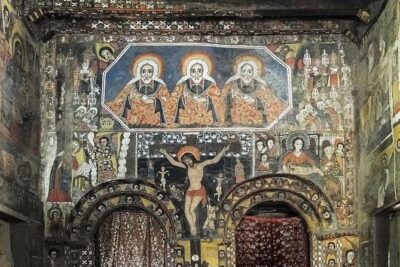
Lalibela, Axum, Danakil and Omo Valley 8 DAYS
Read our review →
Danakil Depression, Lalibela, Omo Valley and Simien Mountains
Read our review →


9 Days Tours To Danakil Depression, Simen MNP, Lalibela With Omo Valley Tribes
Read our review →
5 Day Private tour to the Omo Valley Tribes and Adventure Tour
Read our review →Browse the lists this tour appears in