
Reviewed · OMO VALLEY TOURS
5 Days Omo Valley Tribal Tours
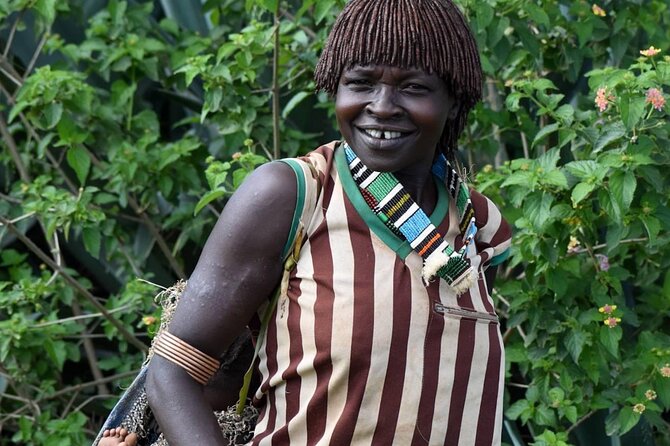
Omo Valley is interesting because it is one of the few places on earth where you can still see distinct cultures living side-by-side, not staged for a bus schedule. In 5 days, you move from Addis Ababa toward the Omo River region and meet groups like the Dorze, Konso, Hamar, and Mursi, each with their own visual traditions.
I especially like two parts of this tour. First, it keeps things small, with a maximum of 4 travelers, so you are not shouting over a crowd when the day gets busy. Second, the human support seems strong, with guides such as Ashu and drivers like Roble or Biruk showing up repeatedly in positive feedback, and that extra coordination matters when you are driving long distances.
The main drawback to plan for is timing and extra costs around ceremonies and photos. Bull-jumping is described as seasonal, and photographer fees plus ceremony access are listed as not included, so you may need to budget beyond the base price.
Key highlights to know before you go
- Small group size (max 4 travelers) helps you move at a human pace
- Overnight stops include both lodge stays and a traditional hut option in Dorze
- Konso UNESCO villages include the stone-and-pole generation markers concept
- Hamar bull-jumping is the signature event, but it is explicitly seasonal
- Mursi lip and earlobe plates are a major focal point on the final day
- Boat trip is included on the route through the Dessanch area
What makes the Omo Valley route work in just 5 days

This is not a “check boxes” tour. You are covering a big region fast, but the day structure is designed around realistic travel time, plus early starts when you have a better chance of getting the scenes you came for.
Omo Valley trips can be physically tiring. Roads can mean long drives and sudden schedule shifts, so I like that this tour builds in breaks and meals when it can. It also uses a guide who can translate what you are seeing into plain context, and when you are comparing groups like Dorze weaving, Konso stonework, Karo body paint, and Mursi plates, translation is what turns photos into understanding.
One more thing to keep in mind: the Omo Valley experience is seasonal by nature. Bull-jumping and other key moments may line up only some of the year, so your expectations should be flexible, not fixed.
More Multi-Day Tours in Addis Ababa
- 6 Days Omo Valley Tribes Tours From Addis Ababa
★ 5.0 · 33 reviews - Danakil Depression and Lalibela 5 Days Tours
★ 5.0 · 28 reviews - 3 Days Omo Valley Tour
★ 5.0 · 24 reviews
Price and what you really get for $1,100 per person
At $1,100 per person for about 5 days, you are paying for logistics in a remote region. That number is not just “sightseeing.” It covers a guide, a private car, fuel, most fees, and at least one included boat trip, plus breakfasts each day.
What is worth checking is what is and is not included in the price total. Domestic flights are listed as not included, even though the plan describes flying between Addis Ababa and Arba Minch and then returning early from the Jinka area. If you are comparing this to other options, ask the operator to confirm the exact flight coverage for your dates, so you do not get surprised at checkout.
Also, ceremony and photography costs can add up. The tour lists bull-jumping ceremonies and photographer fees as not included. If photography is your top goal, budget for extras and plan to talk with your guide ahead of time about the best way to handle it respectfully and practically.
Where you sleep: lodges plus a traditional hut option in Dorze
Overnights are a big part of how the trip feels. You start with Dorze, where the plan mentions staying either in a traditional hut or in Arba Minch at a hotel. That choice can change your comfort level dramatically, so think like this: if you want full immersion, the hut option likely fits your style. If you want fewer surprises with temperature and bedding, the hotel may be the safer bet.
From there, the plan is fairly consistent with lodge-style nights in Turmi (Turmi Lodge) and Jinka (NASA Hotel). Lodges matter here because you will be doing early drives, and you want somewhere predictable to recover.
Bottom line: you are not buying luxury. You are buying access and time with the region, with comfort built in where it makes sense.
Day 1: Addis Ababa to Arba Minch flight, then Dorze beehive-like houses
Day one starts with a flight from Addis Ababa to Arba Minch, then pickup from the airport and a transfer to your hotel. After a short break, you drive to Dorze for the village visit.
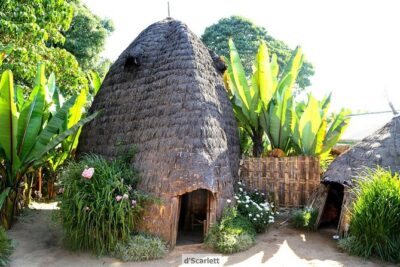
Dorze is a strong opener because the people’s tall beehive-like houses and cotton weaving give you something concrete to look at right away. This is the kind of stop where you can ask simple questions and actually see the answers in real life, not just on a signboard.
If you hit market day, you also get a chance to visit the local Dorze market. That can be a great way to understand daily life, because it shows trade, food, tools, and social rhythms in one place.
Practical note: airports plus early travel plus village walking can add up fast. Bring water, wear shoes you do not mind getting dusty, and plan to keep your schedule loose until you settle in.
Other journeys down to the lower Omo:
- Danakil Depression, Lalibela, Omo Valley and Simien Mountains
★ 5.0 · 23 reviews - 5 Days Omo Valley Tours
★ 5.0 · 15 reviews - 6 Days Lalibela, Omo Valley and Harar
★ 5.0 · 15 reviews - Private Omo Valley Tours From Addis Ababa
★ 5.0 · 12 reviews
Day 2: Konso Cultural Centre and UNESCO villages with generation poles
Konso is the day where the Omo Valley experience becomes more about systems and meaning. You wake early, drive from the Arba Minch area toward Konso, stop for lunch and a short break, then visit a village tied to the Konso Cultural Centre.
The plan specifies that you visit one of the 9 UNESCO-registered villages, which is a hint that you are not just being driven through. You are there to see the logic of how Konso communities mark time and community roles.
One of the most specific details here is the generation pole system. Poles mark the start of a new generation, and the description says a pole corresponds to about 18 years. In practice, that means you can often estimate village age by how many poles are standing, if your guide points it out clearly.
You also get lunch and then move on to an overnight in Turmi. That handoff is important. It keeps you from burning your whole day on one cultural stop and losing energy for the signature event days ahead.
Day 3: Karo village body art and the seasonal Hamar bull-jumping rite
Day three is where many people start picturing Omo Valley as a “must see.” You drive to Karo village, then return for lunch in Turmi, and later visit Hamar people for bull-jumping.
The Karo part is detailed, and that is a good thing. You will hear about their reputation for face and body painting, using natural materials such as colored ochre, white chalk, and yellow mineral rock. The tour also mentions kids’ face and body painting, and it is the kind of moment where your camera skills and your patience both matter.
Then comes the Hamar portion. Bull-jumping is described as a rite where a boy is pronounced a man after jumping over a line of cattle, with the plan stating a range from 5 up to 13 cattle standing in a row. This is the cultural center of gravity for a lot of Omo Valley trips, and it is also why timing matters, since the plan calls it seasonal.
One practical consideration: bull-jumping access may have extra fees. The tour lists bull-jumping ceremonies as not included, and photographer fees as not included too. If you want more than a quick look, talk to your guide early about what costs apply on the day you travel.
And keep in mind that events like this are not made for casual wandering. Listen to your guide on where to stand and when to step back. You are there to witness, not to interrupt.
Day 4: Dessanch area, boat trip, and the drive toward Jinka markets
Day four shifts the focus from “signature ceremonies” to “river-life and regional connection.” The plan includes a boat trip at the Dessanch tribe area, which is a smart inclusion because it changes the senses from dust-and-stare to water movement and daily work along the river.
After breakfast, you head toward the Dessanch area, with the day built around seeing village life and then driving back for lunch and a short break. If it is a market day, you will have a chance to visit a local market during the day.
Then you finish with an overnight in Jinka at NASA Hotel. Jinka is a useful base because it sets you up for the final day, when the plan moves you toward Mago National Park and the Mursi.
This is also the day to think about sleep quality and charging devices. You will likely be using your camera more than you planned, and a power bank can save the day when you are out during drives.
Day 5: Mago National Park to Mursi lip plates, then back to Addis Ababa
Day five begins early. The plan describes driving from the Turmi region toward Jinka, passing through Mago National Park, then visiting a local village of the Mursi kin group. The Mursi are known for making and wearing lower lip and earlobe plates, which is the clearest “this is why you came” tradition on the final day.
This kind of visit can be powerful, but it also asks for tact. Plates are a body practice that carries meaning for identity, so it is worth going slowly, asking your guide what is respectful to do, and not treating the moment like a costume photo op.
After the village visit, you drive back to Jinka for lunch and then fly back to Addis Ababa early on the day. The trip ends back at the meeting point.
The upside of finishing with Mursi is that your cultural understanding tends to be stronger by then. You have already compared how Dorze, Konso, Karo, and Hamar express identity. By day five, you are not staring at differences in isolation. You are seeing how each group uses its own visual language to signal belonging.
The guide and driver effect: Ashu, Roble, Biruk, and Danile-style teamwork
Omo Valley trips live or die on the people behind the scenes. The most repeated strength in the supplied feedback is clear teamwork. Guides such as Ashu are paired with drivers like Roble or Biruk, and that matters because you are not just commuting. You are moving between villages, dealing with schedule pressure, and needing on-the-spot decisions.
You want a guide who can do two jobs at once. First, they translate what you see into something you can actually use when you look at your photos later. Second, they keep your logistics smooth when the day gets unpredictable.
Some feedback also references a different guide, Danile, and the tone is similar, friendly and focused on keeping things running well. If you get a guide like that, you will likely feel less like a passenger and more like a guest with a plan.
Practical things to plan before you go
A few details will help you have a better time without overcomplicating your trip.
- Budget for extras: photographer fees and bull-jumping ceremonies are not included, and domestic flights are listed as not included too.
- Expect early mornings: multiple days start with early driving, and day five includes an early return to Addis Ababa by flight.
- Wear for dust and walking: village days often mean uneven ground and lots of time outside.
- Ask about costs and timing the day before: bull-jumping is seasonal, so you do not want surprises.
- Keep your respect filter on: when a community ritual is involved, your guide’s instructions should lead.
If you are a photographer, this route can be particularly satisfying because each stop has a distinct visual theme, from woven house styles to body painting and lip plates. Still, remember that access and pricing may depend on the day’s conditions.
Who should book this Omo Valley tribal tour, and who should think twice
This tour fits best if you want a structured 5-day window in a remote region and you like meeting people with a guide who can explain what you are seeing. The small group size of up to 4 travelers is a big plus if you value quieter conversations and less chaos.
It also suits you if you prefer a mix of village visits plus one river moment via the included boat trip. That variety helps keep the trip from becoming one long viewing session.
You might want to think twice if you need guaranteed access to the bull-jumping event on your exact date. The plan calls it seasonal, and the ceremony and photo-related costs are not included, so your experience could depend on timing.
Should you book 5 Days Omo Valley Tribal Tours with Enat Ethiopia Tours?
If your goal is to experience several Omo Valley cultures in a tight schedule with a small group and a guide like Ashu (or a comparable team member), I think this is a solid option. The value comes from logistics that would be hard to arrange alone, plus included basics like guide support, car and fuel, and breakfast every day.
Just do two things before you commit. First, confirm exactly how domestic flights are handled for your dates, since the plan mentions flights but also lists domestic flights as not included. Second, ask about potential added costs around bull-jumping and photography so your budget matches reality.
When you line those pieces up, you get a focused Omo Valley experience that is culturally specific, not random.
FAQ
How long is the Omo Valley tribal tour?
The tour runs for about 5 days.
What is the meeting point in Addis Ababa?
The meeting point is Skylight Hotel parking on Africa Avenue, Addis Ababa.
Does the tour include pickup?
Yes, pickup is offered.
How many travelers can be in a group?
The tour has a maximum of 4 travelers.
What is included in the price?
Included items are all fees and taxes, a guide, car and fuel, a boat trip at the Dessanch tribe, and breakfast for 5 days.
Are domestic flights included?
Domestic flights are listed as not included.
Are bull-jumping ceremonies included?
Photographer fees and bull-jumping ceremonies are listed as not included.
Is there a boat trip on this tour?
Yes, there is a boat trip included at the Dessanch tribe.
Where does the tour end?
It ends back at the same meeting point in Addis Ababa.
What is the cancellation window for a full refund?
You can cancel up to 24 hours in advance for a full refund. Less than 24 hours before start time is not refundable.
More 5-Day Experiences in Addis Ababa
- 5 DAYS Lalibela, Axum, Tigray churches and Danakil
★ 5.0 · 34 reviews - 5 Days North Ethiopia Tours
★ 5.0 · 23 reviews - 5 DAYS Axum, Lalibela, Tigray churches and Danakil
★ 4.5 · 22 reviews - 5 Days Lalibela-Danakil Tour
★ 4.5 · 11 reviews
Longer Routes Through Addis Ababa
- Lalibela 3 Days/ 2 Nights Tour package
★ 5.0 · 13 reviews - 9 Days Tours To Danakil Depression, Simen MNP, Lalibela With Omo Valley Tribes
★ 5.0 · 11 reviews - 5 Days Tour to World Heritage-listed Harrar, Dire Dawa and Awash NATIONAL PARK
★ 4.5 · 10 reviews - 5 days Omo valley
★ 5.0 · 9 reviews
Newly reviewed in Addis Ababa
- Addis Ababa City Tour★ 4.5 · 3 reviews
- Full Day Addis Ababa City Tour with Hotel Pick Up And Drop Off★ 5.0 · 3 reviews
- 2 days trek around Lalibela★ 5.0 · 3 reviews
- Day Trip Around Addis Ababa★ 5.0 · 3 reviews
- Northern Ethiopia (Historic route)★ 5.0 · 3 reviews
- Day Tours around Addis Abeba, Melka Kunture and Adadi Mariam★ 5.0 · 3 reviews
- Addis Layover Tour of Mercato With Airport pick up & drop off★ 5.0 · 3 reviews
- Day Trip From Addis Ababa To Debre Ziet★ 5.0 · 3 reviews
Omo Valley Tours, compared.
6 Days Omo Valley Tribes Tours From Addis Ababa
Read our review →
Lalibela, Axum, Danakil and Omo Valley 8 DAYS
Read our review →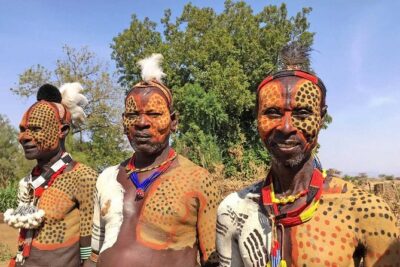
Danakil Depression, Lalibela, Omo Valley and Simien Mountains
Read our review →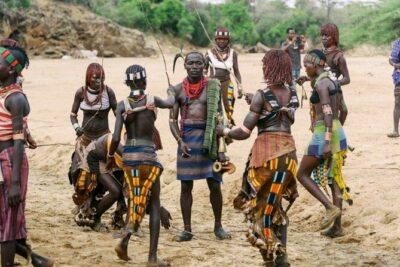


9 Days Tours To Danakil Depression, Simen MNP, Lalibela With Omo Valley Tribes
Read our review →Browse the lists this tour appears in