
Reviewed · OMO VALLEY TOURS
South Omo Valley Tribes 8 Days Tour Package
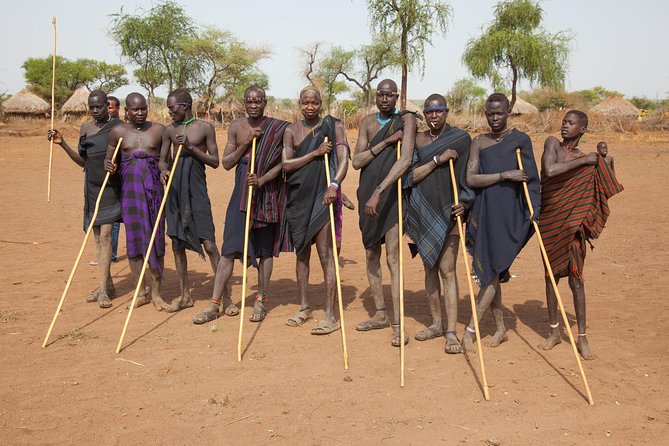
South Omo Valley tribes is interesting because it mixes real daily life with wild scenery and long overland driving, all in one trip. I like that it is built around specific communities like the Mursi, Hamer, and Karo rather than stopping at a generic cultural show. My other favorite bit is the human side, with guides like Haile and Danny earning repeat praise for clear explanations and smooth pacing.
The only real drawback is that the experience is not fancy. Expect basic conditions in remote areas, long days, and a need for moderate physical stamina, since the itinerary moves early and often.
Key highlights at a glance
- Private touring feel: it is a private group, so your plan follows your group and your guide
- Guides with real credibility: strong notes for Haile (and Danny) for communication and culture explanations
- Dorze to Karo to Mursi: you see multiple tribal societies, not just one quick stop
- National Park time that fits the Rift Valley: Nechisar plus Abijatta-Shalla for birds and scenery
- World Heritage Konso villages: hilltop compounds, stone walls, and wagas funerary tradition
- Markets plus thermal relaxation: Key Afer, Amora Gedel, then Wendo Genet Spa to cool down
A Rift Valley road trip built around living cultures
This is not a quick “look and go” itinerary. You will spend full travel days and then slow down for village time, markets, and park hours. That matters because the South Omo Valley is remote, and the culture sits inside ordinary routines like farming, weaving, and ceremony planning, not staged theater.
I also appreciate that the trip is paced across different environments. You start in Addis Ababa with museum context, then move from highlands toward the Rift Valley lakes, and finally into lower river country and weekly market life. It is the kind of route that helps you understand why these communities are where they are, and how they make a living with the land they have.
One more practical note: because the tour covers a lot of ground, you will spend serious time in the vehicle. If you easily get travel-weary, plan to be flexible, hydrate, and treat “arrival day” as part of the experience, not a delay from it.
More Multi-Day Tours in Addis Ababa
- 6 Days Omo Valley Tribes Tours From Addis Ababa
★ 5.0 · 33 reviews - Danakil Depression and Lalibela 5 Days Tours
★ 5.0 · 28 reviews - 3 Days Omo Valley Tour
★ 5.0 · 24 reviews
Price and logistics: what you actually get for $1,890.54
At $1,890.54 per person for about 8 days, you are paying for transport, guides, and a packed schedule of admissions and meals. The big value piece here is that the package includes all fees and taxes, plus an air-conditioned vehicle, driver allowance, and bottled water (2 liters per day per passenger).
Another good value angle is food. You get breakfast 7 times, plus lunch 8 times and dinner 8 times. That can be a budget saver in rural areas where meal quality and pricing can vary a lot.
What is not included is also clear. You will need to plan for international and domestic flights, alcoholic drinks, and tips. Video and camera fees may apply at certain stops, so it helps to pack your camera gear and also ask ahead if there are extra charges.
Also, you start around 7:00 am. That is normal for Ethiopia road trips, but it does mean you should be ready for early mornings, not leisurely starts.
Addis Ababa warm-up, Mercato market and the Lucy museum day
Day 1 is your grounding day. After you land at Bole International Airport, you clear immigration and customs, then meet a FINOT TOUR ETHIOPIA representative for your transfer. After a break, you get a half-day guided visit centered on museums that explain Ethiopia’s peoples and archaeology.
You will go to the Ethnological Museum for artifacts and displays tied to Ethiopia’s ethnic groups, then continue to the National Museum, including Lucy, the 3.2 million-year-old hominid discovered in Ethiopia’s Awa… area (the itinerary notes Ethiopia’s Awa region, with the discovery details shown in the museum).
Why I like this start: it gives you context before you drive into the Omo Valley, where you will hear about identity, tradition, and environment all day. If you arrive feeling a little “new,” the museum time helps you follow the deeper meaning of what you will see later.
If you are expecting nightlife on Day 1, you might be disappointed. This day is mostly about orientation, museums, and resting up for travel.
From Tiya to Dorze, where the houses look like beehives
On Day 2, you leave Addis Ababa early and head south toward Arba Minch, routing through Butajira and Hosaina. You also stop at Tiya to visit the UNESCO-registered stele fields, then continue toward Wolayita Sodo for lunch.
After lunch and driving time, you ascend into the Gughe Mountains and reach the Dorze people at a highland village setting around 2,600 m. The views over Lake Abaya and Lake Chamo are part of the payoff on the way in, and the altitude change is something you will feel in the early hours.
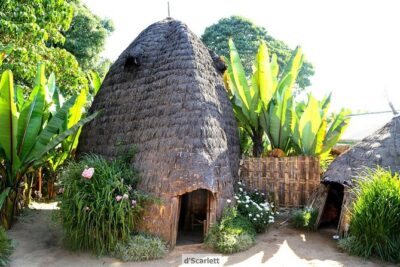
Dorze is a standout stop because it is about craft and architecture. The Dorze are known for tall beehive-like houses and fine cotton weaving. This is one of the places where your village visit is not just about appearance, it is about how people build, work, and maintain skills in a steep environment.
A practical consideration: long driving days stack up. You will likely want to use the vehicle time to rest, and then be mentally ready to stay present during village hours, since it is easy to feel rushed when the day is already full.
Other journeys down to the lower Omo:
- Danakil Depression, Lalibela, Omo Valley and Simien Mountains
★ 5.0 · 23 reviews - 5 Days Omo Valley Tours
★ 5.0 · 15 reviews - 6 Days Lalibela, Omo Valley and Harar
★ 5.0 · 15 reviews - Private Omo Valley Tours From Addis Ababa
★ 5.0 · 12 reviews
Nechisar National Park plus Konso hilltop villages
Day 3 shifts from village life into park time. You go to Nechisar National Park HQ, an area ranked among the most scenic and least visited, with sweeping views across plains and volcanic hills. You will also see Lake Abaya and Lake Chamo, and the itinerary highlights the Bridge of God between the lakes.
This day includes park time plus a boat trip, then continues driving to Konso for the overnight. That combo is smart. Boat time helps you slow down and spot wildlife from the water, and then you transition into a cultural zone at Konso where stone-built villages shape life.
The main drawback is timing. Nechisar days can feel long because you are balancing driving, wildlife viewing, and then reaching the next sleeping location. If you hate “always moving,” this part of the trip may test your patience.
Still, if you like the Rift Valley vibe, you will likely appreciate that this is not just culture. It is culture plus lakes, plus wildlife scenery.
Konso funerary wagas and why the architecture matters
Konso is one of the cultural stops you do not want to rush. Day 4 visits a Konso tribal village, noted as a World Heritage listed site. The villages are built on hilltops for protection, surrounded by high stonewalls, with separate compounds and terraced agricultural fields.
The thing I like here is that the village layout makes sense. The stones are not just aesthetic, they are part of security and community planning. And the terraces are a practical response to farming in challenging terrain.
Another highlighted feature is the wagas, carved wooden sculptures created as part of funerary tradition honoring warrior heroes who have killed an enemy or animal. The itinerary presents wagas as a key cultural highlight, and it is the kind of tradition that rewards patient looking rather than quick photos.
One caution: some people come to the Omo Valley for face painting and market scenes, so they may underrate Konso. Do not. Konso gives you a deeper look at how society organizes itself around land, defense, and memory.
Karo face and body painting on the Omo River banks
Day 5 brings you into Karo territory. You drive into a new tribal area and focus on the Karo along the east bank of the Omo River. Their farming style is flood retreat cultivation, and the itinerary notes crops like maize, sorghum, and beans.
A detail that helps you understand daily constraints is cattle. Unlike some other tribes, the Karo keep only a small number of cattle because of tsetse flies, and that affects how people manage livestock and resources. It is a reminder that environment shapes culture, even when you are focused on ceremonies and appearance.
The Karo are known for elaborate body and facial paintings using white chalk, mixed with yellow rock, red iron ore, and charcoal. Face masks may be worn at times, and clay hair is part of the look. This is one of those stops where photography and respect matter. The tour notes that video and camera fees may apply where applicable, so plan to ask your guide before filming.
This day can feel intense if you are sensitive to close-up ceremonial preparation. If you prefer lighter cultural encounters, talk to your guide about how much time you want for each segment, because the itinerary is packed.
Mursi lip plates and Key Afer weekly market energy
Day 6 combines a Mursi village visit with Key Afer Tribal Market. You leave after breakfast and drive to a Mursi village, where the itinerary calls out the women’s custom of lower lip slitting and inserting circular clay discs after reaching maturity.
This is also where you should slow down and think about tone. Do not treat it like a spectacle. For a meaningful visit, you need to be respectful, listen, and follow your guide’s instructions about behavior and photography.
After that, you head to Key Afer Tribal Market, described as one of the best markets in the Omo Valley because multiple tribes attend. You will walk through sections covering animals, vegetables, cereals, and more. The market is not just color. It is practical, a place where people trade and gather.
One more useful detail from the itinerary: your guide helps you explore the market with you. That matters in places like this, where you want context and you do not want to get lost in crowd chaos.
If you are someone who likes markets, this is likely the day you remember most.
Hawassa and Abijatta-Shalla birds, then a final thermal day in Shashemene
Day 7 moves you toward Hawassa. After breakfast you drive to Hawassa and then visit Abijatta and Shalla National Park. The itinerary mentions hot spring time and park time together, so you get a chance to relax after multiple long days on the road.
At Abijatta-Shalla, you will look for birds like great white pelicans and greater and lesser flamingoes, plus endemic mammals such as warthogs and grand gazelles. The itinerary also notes ostrich farming in the area. Even if you do not catch a perfect wildlife sighting every hour, the lake-and-bird setting is a strong change of pace from the Omo River villages.
Day 8 continues that shift back toward cities. You return to Addis Ababa by road and stop at Amora Gedel, a daily fishing market on Lake Hawassa, where you can get close to pelicans, storks, and other birds used to humans.
Then you visit Ras Tefreian village in Shashemene, a town given to Ras Tefreian, also spelled Rasta in the itinerary, by Emperor Haile Selassie I. Finally, you head to Wendo Genet Spa for a thermal bath, described as a swim on thermal bath to relax after the long Omo Valley portion. The trip ends with a traditional Ethiopian buffet dinner and local drinks.
I like this ending because it gives you a decompression rhythm. After days of intense cultural focus and driving, thermal water is a practical way to reset.
Who this tour suits, and who should reconsider it
This tour suits you if you want a mix of culture plus nature, and you do not mind an itinerary with long drives and early mornings. It is also a good match if you want a private-group feel and strong guidance. In recent trip accounts, Haile stands out for communication and for managing everything smoothly, with Danny also earning praise for knowledge about culture and nature.
It is less ideal if you want high-comfort hotels every night, or if you get uncomfortable in basic conditions. The itinerary itself warns that conditions are basic in parts of the route.
It also helps to be comfortable with markets and ceremonies that feel close and real. This is not a staged museum exhibit. It is life happening in front of you, and the right attitude is part of the experience.
Also, insect and health basics matter. The itinerary talks about tsetse flies affecting livestock for the Karo, which is a reminder that rural Ethiopia comes with environmental realities. Bring your usual travel health items and follow your doctor’s advice.
Should you book this South Omo Valley tour?
If your priority is authentic, community-based encounters in the southern Ethiopia region, this one is easy to recommend. The itinerary pairs key tribal visits (Dorze, Konso, Karo, Mursi) with major Rift Valley nature stops (Nechisar and Abijatta-Shalla) and finishes with thermal relaxation in Shashemene.
I would book it if you value good guiding. The repeated praise for Haile and Danny is not just about facts, it is about how smoothly the days run and how clearly things are explained. For $1,890.54, you are also getting admissions and meals handled, not leaving you to piece everything together.
I would think twice if you hate basic facilities, long road time, or early starts. This is adventure travel by design.
FAQ
What time does the tour start?
The tour meeting time is listed as 7:00 am.
Is pickup offered from Addis Ababa?
Yes, pickup is offered. You are also met by a FINOT TOUR ETHIOPIA representative at Bole International Airport for assistance with your transfer to your hotel.
What meals are included?
The package includes breakfast 7 times, lunch 8 times, and dinner 8 times.
Are park and museum admission fees included?
The tour includes all fees and taxes, and admission tickets are listed for major stops in the itinerary.
Is this a private tour?
Yes, it is private. Only your group participates.
What is the cancellation policy?
You can cancel for a full refund up to 24 hours in advance of the experience start time. If you cancel less than 24 hours before, the amount paid will not be refunded.
Longer Routes Through Addis Ababa
- Lalibela 3 Days/ 2 Nights Tour package
★ 5.0 · 13 reviews - 9 Days Tours To Danakil Depression, Simen MNP, Lalibela With Omo Valley Tribes
★ 5.0 · 11 reviews - 5 Days Tour to World Heritage-listed Harrar, Dire Dawa and Awash NATIONAL PARK
★ 4.5 · 10 reviews - 5 days Omo valley
★ 5.0 · 9 reviews
Newly reviewed in Addis Ababa
- Addis Ababa City Tour★ 4.5 · 3 reviews
- 2 days trek around Lalibela★ 5.0 · 3 reviews
- Day Trip Around Addis Ababa★ 5.0 · 3 reviews
- Full Day Addis Ababa City Tour with Hotel Pick Up And Drop Off★ 5.0 · 3 reviews
- Northern Ethiopia (Historic route)★ 5.0 · 3 reviews
- Addis Layover Tour of Mercato With Airport pick up & drop off★ 5.0 · 3 reviews
- Day Tours around Addis Abeba, Melka Kunture and Adadi Mariam★ 5.0 · 3 reviews
- Day Trip From Addis Ababa To Debre Ziet★ 5.0 · 3 reviews
Omo Valley Tours, compared.
6 Days Omo Valley Tribes Tours From Addis Ababa
Read our review →
Lalibela, Axum, Danakil and Omo Valley 8 DAYS
Read our review →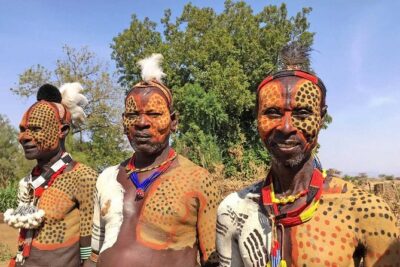
Danakil Depression, Lalibela, Omo Valley and Simien Mountains
Read our review →


9 Days Tours To Danakil Depression, Simen MNP, Lalibela With Omo Valley Tribes
Read our review →Browse the lists this tour appears in