

Reviewed · OMO VALLEY TOURS
Omo Valley 5 Days
The Omo Valley is interesting because you’re not just watching. You’re moving through a tight loop of river cultures, highland communities, and wildlife country, with a route designed for one thing: access. This 5-day Omo Valley circuit is built around a mix of village visits and time on the water, from the Omo River area down toward Lake Chamo.
Two things I like a lot are the 4WD Toyota Land Cruiser logistics, and the way the schedule connects culture stops to real geography, not random checkboxes. You also get included Lake Chamo boat time, which changes the mood from footpaths and huts to open water and big, wild-eyed wildlife chances.
One drawback to consider is that this is a driving-heavy trip, with long days and early starts. Also, one theme that shows up in feedback about the provider is that communication and day-to-day organization can be uneven, so you’ll want to confirm key details in advance and keep your expectations clear.
Key highlights you’ll actually feel on the ground
- Karo and Hamer visits with traditional look and everyday life: body painting at Kolcho village, then Hamer village scenes focused on appearance and family routines.
- Village and elders payments included: that removes a common headache and helps visits happen on respectful terms.
- Mago National Park wildlife scouting: early morning drives with a chance to spot dik dik and lesser kudu.
- Mursi lip-plate culture (context matters): you see a custom that is changing over time, with many older women not wearing plates anymore.
- Dorze weaving in thatched beehive homes: wool and cotton craft time plus a demonstration of uses of the false banana.
- Lake Chamo boat trip for crocodiles and hippo possibilities: not guaranteed, but the searching part is part of the thrill.
Entering Omo Valley culture by flying to Arba Minch and starting fast
The tour starts with a domestic hop from Addis Ababa to Arba Minch, then you head onward by road. That matters because you’re compressing distance, not spending a whole day just getting oriented in Ethiopia’s south.
From the first transfer, you’ll feel the character of the region right away. The route funnels you toward Konso and then deeper into the Omo area, which helps you avoid the most common mistake on culture trips, slow wandering that turns into fatigue.
Other journeys down to the lower Omo:
- 6 Days Omo Valley Tribes Tours From Addis Ababa
★ 5.0 · 33 reviews - 3 Days Omo Valley Tour
★ 5.0 · 24 reviews - Danakil Depression, Lalibela, Omo Valley and Simien Mountains
★ 5.0 · 23 reviews
Konso base and the first push toward Omo communities

After you land in Arba Minch, the drive brings you into Konso, your practical base for the next cultural day(s). Konso is where the trip starts feeling like a lived circuit, with village visits planned around daylight and travel time.
Your ground transport is in a 4WD Toyota Land Cruiser, which is not a fancy perk so much as smart gear. This part of Ethiopia can be rough on schedules, so choosing a vehicle that handles the route better keeps your day moving.
The bigger value here is pacing. By getting you down into the south quickly, you can spend more time at the actual stops instead of sitting on the road until sunset.
Karo at Kolcho village, then Hamer village near your accommodation

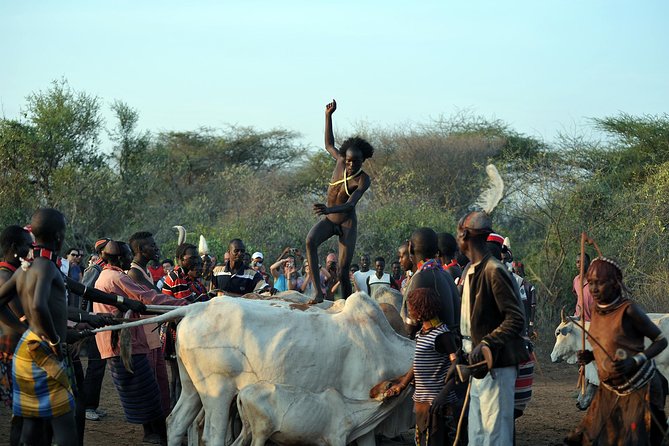
This is the cultural heart of the trip for many people, and you can see why. You go out to the Karo people at Kolcho village on the banks of the Omo River, and the focus is on traditional body painting and personal presentation.
Then you shift to the Hamer Village near where you’re staying. The Hamer are known for pride in appearance, especially the women’s red-dyed braided hair and leather skirts decorated with shells. The homes and daily life are described as built from local materials like mud, wood, and thatch, and the villages function around extended families in tight clusters.
Two details that make this feel more authentic than a quick photo stop are the emphasis on daily structure and the “close-in” village pattern. Each village is described as roughly 10 to 15 huts around which daily life rotates. That means you’re not only seeing objects, you’re seeing how people arrange their lives.
A respectful caution: customs here involve visibility and attention, and the tour includes village and elders payments, which is a sign the visit is meant to be taken seriously. Still, treat photography like a privilege, not a right. Ask first, keep your distance when invited, and don’t interrupt everyday tasks.
Jinka and the small museum stop that sets context before you walk
On the next main cultural day, the route crosses dry sandy plains toward Key Afar, then shifts into more fertile rolling hills before reaching Jinka, a small town in the region.
In Jinka, you visit a small museum that gives insight into tribal customs. That museum stop is useful because it helps you connect what you’re seeing later with the logic behind it, not just the surface images.
Then there’s an optional walk into town. You can meet people along the way, and the pacing is gentler than a constant drive. This is the kind of moment that can turn a trip from “I saw places” into “I understood something about place.”
One practical note: the museum and walk are shorter in your day than the drive. Plan to be patient with timing, because the longer hours on the road shape the overall experience more than the small stops do.
More from Addis Ababa to consider
- 5 DAYS Lalibela, Axum, Tigray churches and Danakil
★ 5.0 · 34 reviews - Danakil Depression and Lalibela 5 Days Tours
★ 5.0 · 28 reviews - 5 Days North Ethiopia Tours
★ 5.0 · 23 reviews - 5 DAYS Axum, Lalibela, Tigray churches and Danakil
★ 4.5 · 22 reviews
Into Mago National Park for dik dik and lesser kudu, then Mursi village

Early starts are part of the deal, and this day uses that energy well. You drive across mountains into the Mago National Park area, described as drier and good for wildlife scouting.
The chance to see dik dik and lesser kudu is the wildlife hook. You won’t control the animals, but you can control your attitude. If you go in expecting a guaranteed sighting, you’ll likely feel disappointed. If you go in ready for surprise, this becomes one of the most fun-feeling parts of the route.
Then you head out to a Mursi Village, where the tour focuses on the decorated clay plates inserted in the lower lips of women. The custom begins around adolescence and can grow over time, with plates that can become very large. Importantly, the tour description also notes that this practice appears to be used less now, and older women may have loose skin without the plates.
That context matters. You get a more honest picture of a living culture under change, not a frozen display. It’s also one reason this kind of visit needs a guide who can explain respectfully and translate what you’re seeing.
As always with cultural encounters, keep your curiosity human. Look, listen, ask when appropriate, and don’t treat physical appearance like a spectacle. The tour’s inclusion of elders payments is part of that tone-setting.
Dorze weaving near Chencha, false banana demos, and Lake Chamo crocodile-hunting
Your final stretch turns from villages and plates into craft and water. You start early, drive across plains, and reach Arba Minch, meaning Forty Springs, a fertile fruit valley known for ensete, often called false bananas.
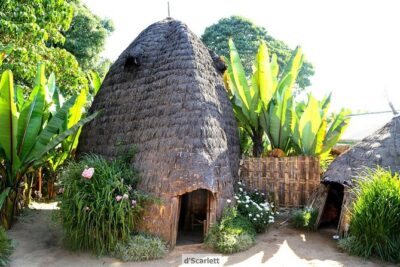
Then you go into the Chencha mountains to visit a Dorze village. Dorze are known for their weaving of wool and cotton, and the homes are distinctive, described as tall and beehive-shaped with thatched construction.
You’ll be able to visit a home and see weaving in action, plus a demonstration of the many uses of the “false banana.” That last part is a great way to slow down. Instead of only looking at people, you’re seeing how plants become materials, food, and tools in everyday life.
After a picnic lunch, you reach Lake Chamo and take a boat trip in search of enormous crocodiles and possibly hippos. This is one of the most memorable shifts on the route because it’s kinetic and unpredictable. You’re not asking for permission to admire a view, you’re watching how big animals behave in their own zone.
One more practical advantage: the included boat ride helps you avoid the common add-on trap where the best part of the region becomes an extra fee. Here it’s already built in.
Price and value: what $1,153.85 buys on this kind of route

At $1,153.85 per person for roughly five days, you should judge this tour on structure and access, not just on “a sightseeing total.” This price includes a lot of the stuff that quietly inflates independent travel.
You get accommodation as per the program with bed and breakfast, plus breakfast included on four mornings. You also get ground transportation in a 4WD Toyota Land Cruiser, local guides and scouts where needed, and included entrance fees plus village and elders payments.
Those inclusions matter because they remove friction. Hiring guides in remote areas and paying for access can be confusing and time-consuming if you try to DIY it. This tour also includes the Lake Chamo boat trip, which is one of the biggest “effort-to-experience” wins on the list.
One thing to double-check before you book, though: the pricing page says international and domestic flights are not included, while the route description clearly includes flying between Addis Ababa and Arba Minch. That can mean either one of two things: the flights are included in your package despite the general note, or they’re not included and you must purchase them separately. Confirm exactly what’s covered for your dates so you don’t get surprised.
Group size, comfort, and the rhythm of long days
This trip is capped at a maximum of 12 people, which is a good size for Ethiopia. Smaller groups make it easier for guides to manage timing and for you to have a less awkward experience around village visits.
The day flow is shaped by travel time. Several days are described as about 7 hours, which tells you the main rhythm is road to stop to road. You should be mentally ready for long stretches in the car, even when the scenery is good.
The good news is that you’re not stuck negotiating logistics. You get all transfers in and transfer out services, and pickup is offered. You’ll also receive a mobile ticket, which helps with coordination and check-in in many common travel setups.
Comfort-wise, the most realistic expectation is that you’ll spend your day switching contexts fast: vehicle, then walking and greetings, then more vehicle. If you like structured pacing and don’t mind bumpy stretches, you’ll likely do fine.
Cultural etiquette and photo behavior that keeps the day positive
Because the core of the experience is cultural, etiquette is not optional. You’re visiting villages where appearance and social presentation matter, and you’re also visiting spaces linked to customs like body painting and lip-plate traditions.
A few smart habits help a lot:
- Ask before photographing, and follow what elders or guides request.
- Keep your distance during personal moments, and don’t push into work areas.
- Treat the elders payments and included village access as part of a permission process, not a ticket stub.
One name shows up in positive feedback for local guidance in the Omo Valley: Euale. That kind of guide presence matters because a good interpreter can steer you away from misunderstandings and toward respectful context.
Also, be ready for the culture to feel “serious.” These are not costume sets for short attention spans.
When organization gets messy, how you protect your trip
Here’s the reality check part. Some feedback for this operator on the Omo Valley route has pointed to poor communication and chaotic organization. That doesn’t mean your trip will be bad, but it does mean you should take charge of clarity.
Before you go, I’d recommend you confirm these items by message or in writing:
- your pickup time and pickup point in Addis
- the day-by-day sequence as it applies to your dates
- your guide name and the contact phone number
- whether the Arba Minch flights are included in your package
This isn’t paranoia. It’s just how you get the smooth version of a trip like this.
If your communication is tight and expectations are shared, you’ll likely get the best parts of the route: culture access, wildlife scouting, weaving, and the Lake Chamo boat segment.
Should you book the Omo Valley 5 Days with Ethio Travel And Tours?
Book it if you want a structured Omo Valley experience with included access costs, a small group size, and real route flow from Addis Ababa to Arba Minch, through Konso, toward Mago National Park, and down to Lake Chamo.
I’d think twice if you hate long drives, need ultra-clear communication with no room for confusion, or you don’t want to handle the risk that flights coverage might be unclear unless confirmed. This tour can be the right fit for people who value guided context and don’t mind that rural travel moves on local time.
If you want the high-value version, do two things: confirm your flight coverage in writing, and ask your guide team how photo rules and village pacing will work on the days you visit.
FAQ
How long is the Omo Valley experience?
The tour is about 5 days.
What is included in the price?
The package includes accommodation as per the program, all transfer in and transfer out services, ground transportation by 4WD Toyota Land Cruiser, local guides and scouts where needed, the Lake Chamo boat trip, and all entrance fees plus village and elders payments. It also includes bed and breakfast and breakfast for four mornings.
Are flights included?
The itinerary includes flights between Addis Ababa and Arba Minch. However, the offer also states that international and domestic flights are not included. You should confirm what your specific booking includes for those flights.
What village visits are included?
The route includes visits connected to the Karo people at Kolcho village, the Hamer village, a stop around Dasenech village/Jinka area with a museum visit and optional walk, and a Mursi village. It also includes a Dorze village visit focused on weaving.
Is the Lake Chamo boat trip included?
Yes. The boat trip on Lake Chamo is included.
How many people are in the group?
The tour has a maximum of 12 travelers.
What happens if weather is bad?
The experience requires good weather. If it is canceled due to poor weather, you will be offered a different date or a full refund.
What is the cancellation refund window?
You can cancel up to 3 days in advance for a full refund. If you cancel less than 3 days before the start time, the amount paid is not refunded.
Newly reviewed in Addis Ababa
- Addis Ababa City Tour★ 4.5 · 3 reviews
- Full Day Addis Ababa City Tour with Hotel Pick Up And Drop Off★ 5.0 · 3 reviews
- 2 days trek around Lalibela★ 5.0 · 3 reviews
- Day Trip Around Addis Ababa★ 5.0 · 3 reviews
- Northern Ethiopia (Historic route)★ 5.0 · 3 reviews
- Addis Layover Tour of Mercato With Airport pick up & drop off★ 5.0 · 3 reviews
- Day Tours around Addis Abeba, Melka Kunture and Adadi Mariam★ 5.0 · 3 reviews
- Day Trip From Addis Ababa To Debre Ziet★ 5.0 · 3 reviews
Omo Valley Tours, compared.
6 Days Omo Valley Tribes Tours From Addis Ababa
Read our review →
Lalibela, Axum, Danakil and Omo Valley 8 DAYS
Read our review →
Danakil Depression, Lalibela, Omo Valley and Simien Mountains
Read our review →


9 Days Tours To Danakil Depression, Simen MNP, Lalibela With Omo Valley Tribes
Read our review →Browse the lists this tour appears in