

Reviewed · OMO VALLEY TOURS
Tribes of the Ethiopian Omo Valley – 9 Day Tour
Omo Valley tours are interesting because they force you to slow down and look closely at how people live far from the usual tourist circuit. I like the mix of tribal cultural visits and practical stops like Tiya’s carved stelae, which gives you context before you meet communities. One consideration is that the driving is part of the experience, so you’ll want a moderate fitness level and a relaxed attitude about long days on the road.
I also like how this trip keeps the group small, with a maximum of 20 travelers, and uses an air-conditioned vehicle. And the operator, Simien Image Ethiopian Tour and Travel Company, is clearly focused on scheduling and responsiveness, including regular contact and feedback during planning. The trade-off is you are moving across big distances, so you should expect a packed pace rather than a slow travel style.
If you want Ethiopia that feels real, this kind of itinerary does it by putting you where the culture actually is, from church and museum time in Addis Ababa to market days and village visits in South Omo. You’ll get chances to observe life firsthand, like a bull-jumping ceremony if you’re lucky, and the Dorze home where bread is made from false banana. Just go in with curiosity, patience, and the awareness that these are living communities, not a theme park.
Key moments to anchor your expectations
- Tiya World Heritage Site: carved stelae and symbols tied to an ancient culture in the Soddo region
- Lake Chamo boat ride (Nech Sar Park): a chance to see crocodiles, hippos, and birds in the wild
- Dorze village excursion: bread from false banana and locally made alcohol at a traditional house
- South Omo road stops: Karat Konso, Weito, and Erbore photo moments on the way to Turmi
- Key Afar Thursday market: a busy weekly meeting point for multiple South Omo groups
- Konso Cultural Centre and Mago Park: stick fights, daily life observations, and Rift Valley recovery at Langano
Addis Ababa first, so the rest of the trip makes sense

Your trip starts in Addis Ababa with an airport meet-up and a transfer into the city for a chance to rest. After that, you get a structured city day that helps you understand Ethiopia’s bigger picture before you head south.
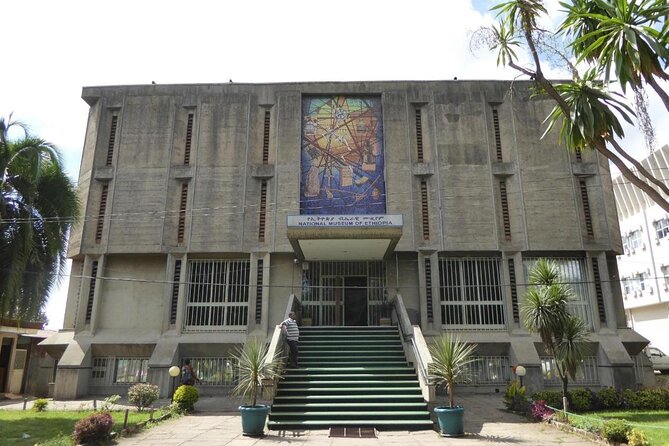
You’ll visit the National Museum of Ethiopia, where the main draw is the fossil collection known as Lucy, linked to Australopithecus afarensis from 3.2 million years ago. Even if you don’t usually love museums, this stop gives you a strong sense of how deep Ethiopia’s human story goes, and it fits nicely with the later visit to Tiya’s ancient stelae.
Next is the Ethnological Museum, set in Haile Selassie’s former palace and located within Addis Ababa University’s main campus grounds. The setting matters here, because it makes the exhibits feel like part of the city’s identity rather than something dropped into a random building. You also visit major Orthodox sites, including Holy Trinity Cathedral (Kidist Selassie) and St. George’s Orthodox Cathedral, both tied to Ethiopia’s history of liberation and conflict with Italian forces.
Entoto Mountain rounds out the day. It’s where King Menelik tried to build a capital city, and you can see a church museum and an old house of Menelik. I like starting with viewpoints and context like this, because it makes the contrast clearer when you later trade mountain views for river valleys, markets, and village compounds in South Omo.
In the evening, the plan includes a traditional Ethiopian restaurant option, with local food and Ethiopia’s dancing. If you’re tired from travel, treat this as the easy on-ramp, not a must-see night out.
Other journeys down to the lower Omo:
- 6 Days Omo Valley Tribes Tours From Addis Ababa
★ 5.0 · 33 reviews - 3 Days Omo Valley Tour
★ 5.0 · 24 reviews - Danakil Depression, Lalibela, Omo Valley and Simien Mountains
★ 5.0 · 23 reviews
The Tiya Stele Field stop that adds real archaeological context
On the drive south from Addis Ababa toward Arba Minch, you stop at Tiya, a World Heritage Site that’s important in the Soddo region. You’ll be looking at 36 monuments, including 32 carved stelae covered with symbols, many of which are hard to decipher.
This is one of those stops that quietly changes how you experience everything after it. When you’ve just seen ancient carved stone, village life in South Omo doesn’t feel like it exists in a vacuum. It helps you remember that cultures evolve over time, and that Ethiopia’s heritage is not limited to one era or one type of monument.
The on-the-road pacing matters too. This stop is short enough to keep the day moving, but substantial enough to feel like more than a quick photo break. For me, that balance is a big part of what makes a road trip itinerary work.
Lake Chamo and the Dorze house, a rare mix of wildlife and daily life
Day 4 brings you into a very different scene around Arba Minch, starting with a boat ride on Lake Chamo within Nech Sar Park. The itinerary specifically points out chances to observe huge crocodiles and hippos in the wild, plus water birds.
A boat ride here can feel like a window into the local ecosystem, because you’re not just looking at people and culture, you’re also seeing the natural forces that shape where people live and how they travel. Just remember that wildlife sightings are never guaranteed in the way a museum display is, so stay flexible and don’t schedule your excitement as if every animal will show up.
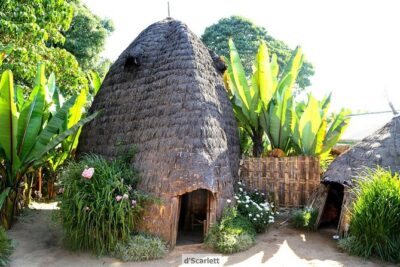
After lunch in Arba Minch, you head to Chencha and visit the Dorze people. The highlight is a traditional Dorze house where you can watch how bread is made from false banana, and also drink locally made alcohol. This is exactly the kind of hands-on detail that makes cultural visits feel specific rather than generic.
The bread from false banana detail is a great example of what you gain from a targeted village excursion. Instead of a general talk about tradition, you get a glimpse into practical food knowledge and daily production. If you like to understand culture through routine activities like cooking and fermenting, you’ll probably enjoy this segment.
Turmi and the South Omo photo stops, with one big if

The road to Turmi is broken up with stop-offs that are designed to keep the journey interesting. You pass by Karat Konso, Weito, and Erbore, and the text notes that at Erbore you can take photos of the Erbore people.
This part is best for travelers who don’t mind being in transit and prefer short, focused stops over one long site day. It can be a strong way to stretch out the trip, but it also means you should keep your expectations modest about time spent at each place. Think of these as glimpses that add texture.
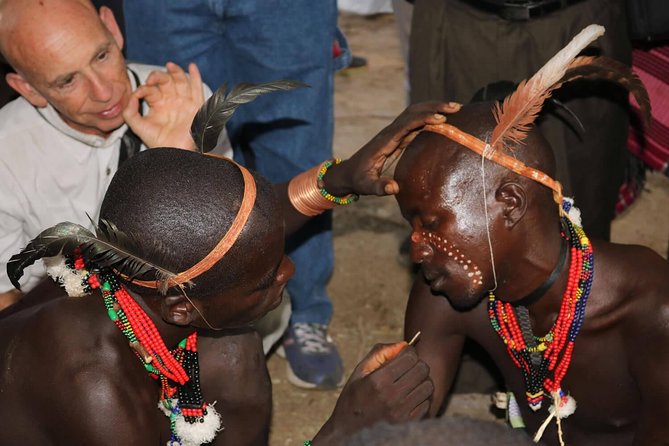
Once you reach Turmi, there’s an added possibility: if you’re lucky, you may attend a bull-jumping ceremony in a Hamer village near Turmi. That if matters. A ceremony depends on timing and access, and you shouldn’t treat it like a guaranteed show.
Even so, the chance is valuable because it signals a willingness to experience local events where they happen, rather than only visiting places set up for tourists. If ceremonies are important to you, be ready to follow your guide’s cues, keep your camera use respectful, and accept that sometimes access is simply not possible.
More from Addis Ababa to consider
- Full Day Tour of Addis Ababa with Hotel Pickup and Drop-off
★ 5.0 · 430 reviews - Taste of Ethiopia
★ 5.0 · 406 reviews - Day Trip From Addis Ababa See Historical Monastery,Stunning Nature,Animals,Birds
★ 5.0 · 303 reviews - Addis Ababa: Debre Libanos, Blue Nile Gorge, and Cave Tour
★ 4.5 · 256 reviews
Key Afar market day and Konso cultural time: people, rhythm, and rules
Day 6 shifts you from Turmi to Jinka, with a critical stop at Key Afar. The itinerary states that every Thursday, there is a local market there, attracting Hamer, Benna, Konso, Ari, and many other South Omo groups.
A weekly market is one of the best places to understand a region quickly, because you see how different groups interact through trade and daily needs. It’s also where you can often observe food, clothing, and barter habits without needing a formal explanation first. I like market days because they naturally reveal variety, even when you’re only there for a short window.
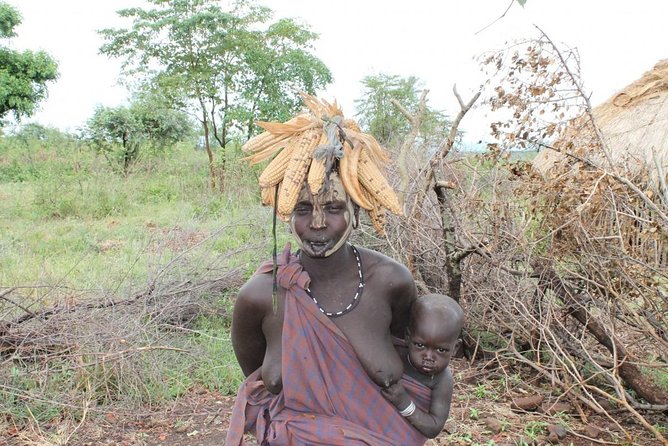
Next, you move toward Konso Cultural Centre and the Mago Park area. The day includes an excursion to the Mago Park, described as where the Mursi tribe lives. The tour notes two well-known aspects you’ll hear about: women of the Mursi who slit their lower lip and insert a clay or wooden plate, and men who fight donga, a stick fight connected to choosing marriage-ready bachelors.
I’m glad the itinerary describes these as cultural practices rather than treating them as something to gawk at. Still, use common sense. Ask before taking photos, avoid pushing for forced attention, and remember that these practices have meaning inside the community, not just outside it. A respectful approach is the difference between a snapshot and a connection.
The plan also includes time in the middle of the day for returning to Jinka for lunch time, then driving to Karat Konso. That schedule break is useful because it keeps you from feeling like your whole day is one long chase. If you’re someone who gets travel-weary, these built-in transitions help.
Langano Lake for a reset, then back to Addis Ababa

On day 8 you drive from Karat Konso to Langano early in the morning. Langano is described as part of the Rift Valley lakes, and the itinerary says you can take a dip, with the area popular among people looking to get out of Addis for a few days of rest and relaxation.
This is a smart move after several consecutive days tied to villages and long drives. You get a low-stakes break where the main goal is recovery. It’s also the kind of change of pace that makes the final drive back to Addis Ababa feel easier, because you’re not ending the trip drained.
On day 9, you drive back to Addis Ababa, and the program ends once you arrive in the city. This gives you closure without another day of intense site hopping.
Price and logistics, and whether it’s good value
The price is listed at $1,111.00 per person for an approx 9-day trip. For a route that covers major days in Addis Ababa plus multiple remote regions in South Omo, that number makes more sense when you look at what’s included.
You get an air-conditioned vehicle, a professional guide, and included fees and taxes. Meals are also included for 8 breakfasts, 8 lunches, and 8 dinners, which is a big deal in places where food costs can add up quickly. The trip also includes a scout fee, which matters in remote regions where movement and access are not purely “tourist normal.”
Two small practical notes: alcohol is not included, and admissions for everything listed are included as part of the program where specified. That means your daily spending is likely to be driven mostly by drinks and any personal extras you choose to buy.
Group size is capped at 20 travelers, which is on the small side for a tour. That can help you feel more like you’re traveling with a team rather than being shuffled. The trip also uses a mobile ticket and offers pickup, which typically simplifies arrival and transfer.
Finally, your physical readiness matters. The tour asks for moderate fitness, which fits the reality of long drives and early starts. If you’re the type who needs frequent rest stops and hates sitting for hours, you’ll want to plan for that mental stretch.
Who this tour suits, and who might not love it
This is a strong match if you want a south Ethiopia itinerary that actually reaches remote communities, with time built in for both cultural context and day-to-day observations. You’ll likely enjoy the mix of museum and cathedral time in Addis, archaeological stops like Tiya, wildlife time on Lake Chamo, and village visits where food and ritual practices are highlighted.
It’s also a good fit if you value good trip management. The operator’s reputation in the notes you provided centers on scheduling, attention to detail, and customization based on requests, plus regular contact and feedback during the planning process. If you like clarity and you want someone to keep the machine running, this company seems aligned with that.
I’d be cautious if you dislike long travel days or if you only want highly predictable, museum-style experiences with fixed timing. This trip includes multiple depends-on-conditions moments, like the possibility of attending a bull-jumping ceremony and the reality that wildlife viewing on a boat ride can’t be guaranteed.
Should you book it
If you want Ethiopia that feels closer to real life than a quick checklist, I think this is book-worthy. The itinerary balances deep context in Addis and at archaeological sites with tangible cultural encounters in South Omo, plus a recovery day at Langano so you don’t finish exhausted.
Pick this tour if you’re comfortable with a packed schedule, you want a small group setup, and you’re the type who can handle cultural visits with respect and patience. The price looks fair when you factor in the guide, vehicle, fees, and the majority of your meals, and the operator’s planning style appears to be a major strength.
One last tip: if ceremonies, markets, and tribe visits are the main reason you’re going, check your own expectations. Keep them curious, not demand-heavy, and you’ll get more out of every day.
FAQ
What is the duration of the Tribes of the Ethiopian Omo Valley 9 Day Tour?
The tour is listed as approximately 9 days.
Where does the tour start?
It starts in Addis Ababa, Ethiopia, with an airport meeting on Day 1 and then transfers into the city center hotel.
What time does the tour start each day?
The start time is listed as 8:30 am.
Is pickup included?
Pickup is offered.
How big is the group?
The tour has a maximum of 20 travelers.
What meals are included?
Breakfast is included (8 times), lunch is included (8 times), and dinner is included (8 times). Alcoholic beverages are not included.
Which major stops are included in the trip?
The trip includes Addis Ababa highlights like the National Museum of Ethiopia (Lucy), the Ethnological Museum, Holy Trinity and St. George’s Cathedrals, and Mount Entoto. In the south it includes Tiya, Lake Chamo boat ride, Dorze village visits, and stops on the way to Turmi and Jinka, plus Langano Lake before returning to Addis Ababa.
What is the cancellation policy?
You can cancel up to 3 days in advance for a full refund. If you cancel less than 3 days before the start time, the amount paid is not refunded.
Is there a mobile ticket?
Yes, the tour includes a mobile ticket.
Newly reviewed in Addis Ababa
- Addis Ababa City Tour★ 4.5 · 3 reviews
- Full Day Addis Ababa City Tour with Hotel Pick Up And Drop Off★ 5.0 · 3 reviews
- 2 days trek around Lalibela★ 5.0 · 3 reviews
- Day Trip Around Addis Ababa★ 5.0 · 3 reviews
- Northern Ethiopia (Historic route)★ 5.0 · 3 reviews
- Addis Layover Tour of Mercato With Airport pick up & drop off★ 5.0 · 3 reviews
- Day Tours around Addis Abeba, Melka Kunture and Adadi Mariam★ 5.0 · 3 reviews
- Day Trip From Addis Ababa To Debre Ziet★ 5.0 · 3 reviews
Omo Valley Tours, compared.
6 Days Omo Valley Tribes Tours From Addis Ababa
Read our review →
Lalibela, Axum, Danakil and Omo Valley 8 DAYS
Read our review →
Danakil Depression, Lalibela, Omo Valley and Simien Mountains
Read our review →


9 Days Tours To Danakil Depression, Simen MNP, Lalibela With Omo Valley Tribes
Read our review →Browse the lists this tour appears in