
Reviewed · DANAKIL DEPRESSION TOURS
From Semera: Danakil Depression 3-Day Tour
What makes the Danakil Depression tour from Semera so compelling is that it feels engineered by nature for shock and awe: an active volcano, salt basins far below sea level, and mineral hot spots that look like they belong on another planet. You’re based out of Afar, traveling by 4×4 toward places most people only see in documentaries.
I especially like how the trip mixes two kinds of reward. First, you get your feet moving at Erta Ale, where you’re not just watching from afar. Second, you get your body cooling off in the salty water at Afdera, plus you’ll spend time around the salt flats and the camel-driven salt economy.
One possible drawback: this is not a sit-and-snap tour. A good level of physical fitness matters, and you should expect long days, rough ground, and the mental stress of extreme conditions. The name of the game is “steady and prepared,” not “tourist comfort.”
Key highlights worth the hype
- Erta Ale hike with early access: you aim to reach the volcano at a time that makes the experience feel real, not rushed
- Lake Afdera swim and float: highly saline water where you can actually float, plus you’re traveling far below sea level
- Dallol’s strange geothermal colors: hot springs, acid ponds, and terrain that looks geologic and theatrical at the same time
- Salt caravans in action: see how camels help move salt from Lake Asale
- Traditional salt excavation: you’ll witness the older methods locals use, not just scenic overlooks
- Crew support that keeps things smooth: strong organization and a practical approach, including guides and drivers like Phili and Addis in past groups
From Semera to Afdera, where the air feels different
The first day is all about transition, meaning you go from normal life to Afar’s brand of extremes. You’ll be picked up at Semera Airport, then driven toward the Erta Ale area, with a lunch stop in Afdera, a town known for its proximity to the salt lake.
This is where I think the tour does a smart thing: it gives you a mid-day reset before the longer, heavier days. You stop around Lake Afrera, and the centerpiece here is the chance to swim and float in very salty water about 100 meters below sea level. It’s one of those rare travel moments where you don’t need special skills. Salt does the work for you, and your body gets a weird little vacation inside the middle of a harsh place.
Practical note: salty water can be abrasive, especially if you wear contacts or scratch-prone skin. Bring a plan for rinsing and protecting your eyes if you’re going to swim. Even if you’re not a swimmer, floating can still be fun, and you’ll get those “how is this real?” photos without being on the move nonstop.
Other descents into the Danakil:
- 3 Days Danakil Depression Tour from Semera City
★ 4.7 · 34 reviews - 3 Days Desert Adventure: Discover Danakil’s Hidden Wonders!
★ 4.7 · 5 reviews - From Semera: 3-Day Danakil Depression Tour
★ 5.0 · 3 reviews
Erta Ale base camp, camping near a live volcano
Day two starts early in the sense that your hike energy needs to start early too. You leave Erta Ale base camp at about 8:30 AM, and the goal is to spend real time at the volcano before the day pulls you onward.
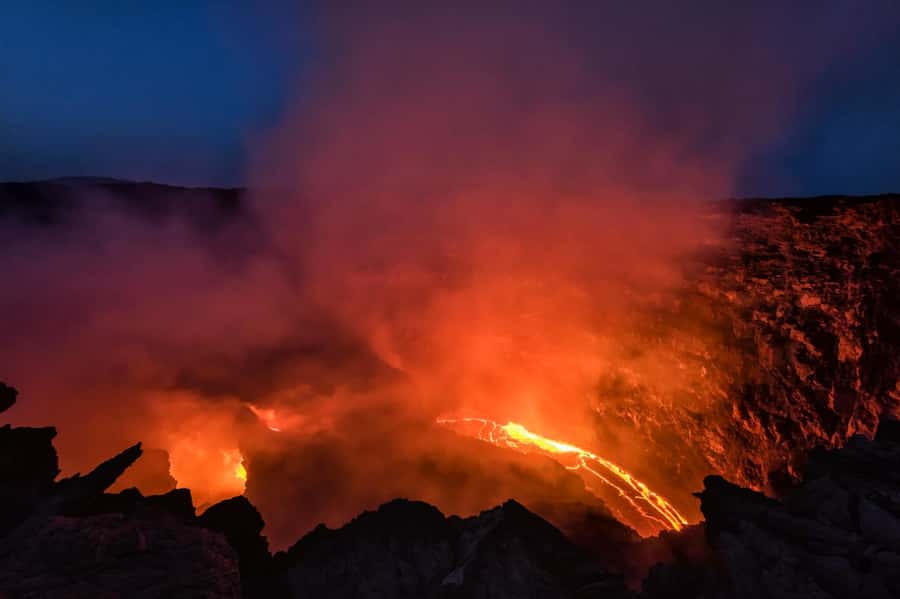
Erta Ale is one of the world’s most active volcanoes. The point of going isn’t danger for danger’s sake, it’s perspective. The terrain looks lunar, the ground feels wrong underfoot, and you’re close enough to see why people call it otherworldly. In one group described by a past booking, they managed to walk on lava about six months old, reached early, and then watched sunrise from a salty setting while eating breakfast. Whether your exact timing matches, the structure of the day is built for that kind of payoff: arrive when conditions are best, then linger.
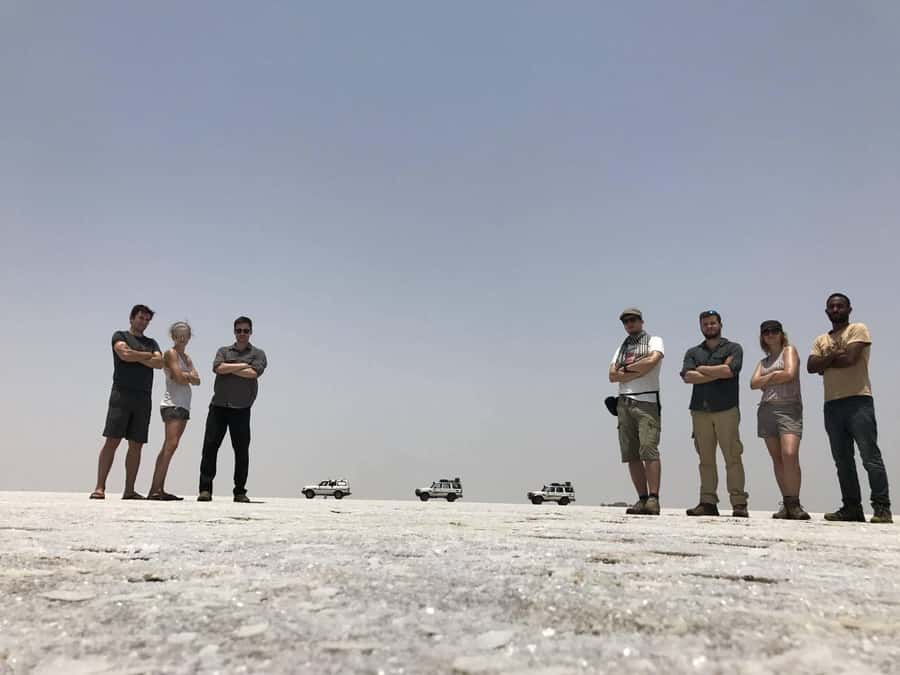
After your volcano time, you move toward the salt side of the Danakil Depression. By around 4:00 PM you arrive in Hamedela, then you continue to Lake Asale salt flats for sunset. Sunset here matters because the colors come from minerals and heat contrasts, not just clouds. You also get views of camel caravans transporting salt, which is the other half of this region’s story. It’s not only geology. It’s work. It’s commerce. It’s a tradition people rely on.
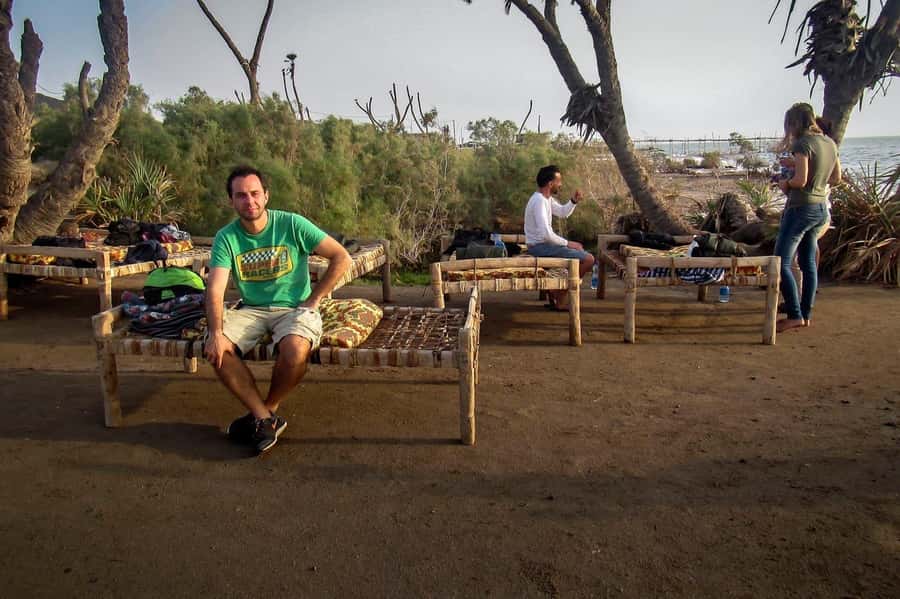
You’ll overnight camping near Hamedela. Camping doesn’t mean “rough for the sake of rough.” The tour includes camping gear, a mattress, and clean bedsheets, which is a big deal when you’re far from any easy backup plan. You’ll also have meals each day, plus unlimited water, which helps you stay calm about basic needs.
Possible drawback to consider: even with support, sleeping in a remote camp plus early mornings can be a lot if you’re not used to this style of travel. Mentally, you need a “small discomfort, big payoff” attitude.
Lake Asale sunsets and camel-driven salt life
This stretch is where the tour shifts from “look at rocks” to “watch a working system.” Lake Asale is a salt flat environment, and the highlight isn’t just wide views. It’s the camel caravans you can observe while they transport salt.
I like this because it grounds the whole trip. Danakil can feel surreal. Watching people and animals moving through it makes the region feel alive and human. You start to see that the salt basins are not static scenery. They’re part of a local routine, and you’re visiting during that routine.
For photographers, golden hour helps a lot. The light changes how mineral surfaces look, so the salt flat texture becomes more visible. For non-photographers, the benefit is simpler. You get a moment where the day slows down, you can breathe, and the environment stops feeling like a punishment and starts feeling like a place.
Dallol’s color zones, acid ponds, and salt lake time
The third day is the “show me everything” day, and Dallol is why. You’ll visit the colorful Dallol area (with guided time on site), then you’ll keep moving through more salt flat scenery around Lake Asale and see the traditional salt excavation methods.
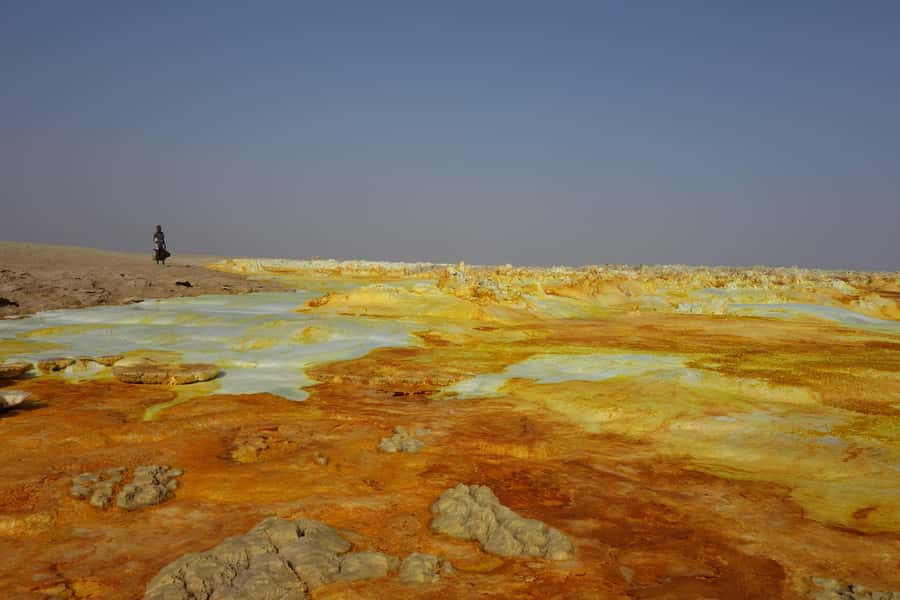
Dallol’s reputation is deserved because it looks chemically strange. The tour notes colorful hot springs and sulfuric acid ponds, so you’re not just seeing pretty water. You’re seeing geothermal activity expressed through minerals and reactions. In practical terms, treat it like a science zone as much as a scenic one. Stay where you’re guided, don’t touch odd-looking surfaces, and keep your distance from anything that seems unstable.
You’ll also have time to observe camel caravans again, plus the excavation methods by locals. This is one of the best ways to understand the region’s economy without a lecture. When you see how salt is harvested and transported, the salt flats stop being “cool places” and start being “real livelihoods.”
Finally, there’s the opportunity to swim in the salt lake area again. Not every environment is swimmer-friendly, and salty water can be tough on eyes and skin. But the idea of ending the tour with another float session is a smart rhythm. You finish with motion, not just walking away from it.
Then you drive back to Semera, arriving at the airport around 4:00 PM, which is helpful for planning onward travel that same day if your flights allow it.
Price and value: $450 for a remote, permit-heavy world
At $450 per person for three days, this tour isn’t cheap, but it’s not randomly priced either. Danakil is remote. That means costs show up in transport (4×4), specialized driving, fuel, camping support, and the permits and entry fees required for the region.
Here’s where the value really shows up for most people:
- Transportation in 4×4 vehicles for a multi-day route where normal roads likely won’t do
- Camping setup including camping gear, a mattress, and clean bedsheets, which is more than you’d get on a DIY version
- Meals each day plus unlimited water, so you’re not hunting for food in places with limited options
- All necessary permits and entry fees handled for you
Also, the tour supports different diets, including kosher, halal, vegetarian, and vegan options. That’s not a minor detail. When you’re eating while traveling through extreme areas, it helps to know you’re not left with a sad bowl of plain rice.
What’s not included is domestic flights. If you’re coming from elsewhere, your total trip cost will rise depending on your Ethiopian flight plans, but that part is outside the tour price.
Guides and organization: why it matters more here than anywhere else
I’m a big believer in the “right guide makes the whole thing easier” rule. In Danakil, that’s not about storytelling. It’s about timing, route decisions, safety routines, and handling the practical stuff like pacing and gear.
In past groups, names like Phili (tour guide) and Addis (driver) come up, plus Isaac as part of coordination and support. More than the names, I like what these reports point to: guides and drivers who are attentive to needs and keep the trip organized.
You can feel why this matters once you’re out in Afar. The days are long, the distances are serious, and the environment doesn’t care whether you’re tired. Good organization helps you avoid the common mistakes like underestimating heat, arriving too late for the best light, or feeling lost when you should be focused.
What this trip asks of you, and who should go
This is where I’ll be blunt, because it’s kinder than pretending.
You should consider this tour if you:
- Like hands-on travel, not just viewpoint hopping
- Are comfortable with camping and early starts
- Want active volcano and geothermal terrain, not a polished luxury circuit
- Can handle walking around uneven surfaces with hiking shoes and hiking pants
You should think twice or ask serious questions first if you:
- Have heart or stamina concerns. One booking specifically cautioned that weak hearts should not go and that you should be physically and mentally fit
- Hate discomfort and uncertainty. Remote travel means things won’t feel like a city trip
The tour is listed as wheelchair accessible, and you should absolutely ask the provider how that works for the key walking segments. Based on what the tour includes, expect that accessibility could be limited by the terrain and the volcano-adjacent hiking. A clear answer from the company beats guessing.
Packing tips that actually help
The tour provides a lot of the essentials, but you still need to show up ready.
Bring:
- Hiking shoes
- Hiking pants
- Passport (a copy is accepted)
My extra, practical suggestions (not “nice to have,” just smart):
- A hat and sunscreen. The sun in this region is not subtle.
- Sunglasses for salt glare if you plan to swim or watch the flats in the bright hours.
- A plan for eye protection if you float in saline water.
- Basic layers for early mornings. Even if the days are hot, mornings can feel different.
Also, keep your expectations realistic. The point isn’t comfort. The point is to experience a place that looks and behaves like it belongs to Earth’s rawer chapters.
Should you book this Danakil Depression 3-day tour from Semera?
If your travel style is “I want the real thing, even if it’s hard,” you’ll probably love this. The combination of Erta Ale time, Lake Afdera floating, and Dallol geothermal sights is rare. Add in the salt caravan and excavation observations, and you get more than scenery. You get a sense of how people live and work in a world that is otherwise difficult to imagine.
I’d only skip it if you want a low-effort trip, or if your health makes high heat and physically demanding walking a no-go. For everyone else, the value is strong because the logistics, permits, meals, and camping basics are handled, letting you focus on what you came for.
If you book, do it with a simple mindset: steady steps, hydrate, listen to your guide, and treat every stop as its own moment. This is not a checklist tour. It’s a three-day education in extreme Earth, delivered at pace.
FAQ
Where is the pickup for the tour?
Pickup is included from Semera Airport. If you are already in Semera, you can request pickup from your hotel lobby.
How long is the Danakil Depression tour from Semera?
The tour runs for 3 days.
What language is the guide?
The live tour guide speaks English.
What activities are included around the salt lakes?
You can swim and float in Lake Afdera, and there is also an opportunity to swim in the Salt Lake area later in the tour.
What’s included in the meals?
You get breakfast, lunch, and dinner, plus unlimited water during the tour.
What should I bring for this trip?
Bring hiking shoes, hiking pants, and your passport (a copy is accepted).
More 3-Day Experiences in Semera
- 3 Day Danakil Depression Ertale and Dallol Tours
★ 5.0 · 44 reviews - 3 Days Dankile Depression group Tours
★ 5.0 · 40 reviews - 2-Night 3-Day Danakil Depression Tour without Flights
★ 4.8 · 31 reviews - Trekking at Bale Mountains 3 Days
★ 5.0 · 28 reviews
Newly reviewed in Semera
- From Semera: 3-Day Danakil Depression Tour★ 5.0 · 3 reviews
- 3 Days Desert Adventure: Discover Danakil’s Hidden Wonders!★ 4.7 · 5 reviews
- 3 Days Danakil Depression Tour from Semera City★ 4.7 · 34 reviews
Danakil Depression Tours, compared.
12 Days SIMIEN MOUNTAIN-LALIBELA-DANAKIL-TIGRAY CHURCHES
Read our review →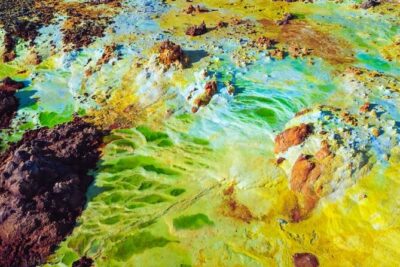
3 Day Danakil Depression Ertale and Dallol Tours
Read our review →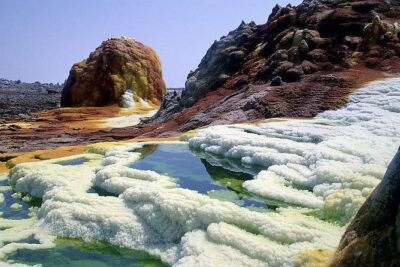
5 DAYS Lalibela, Axum, Tigray churches and Danakil
Read our review →3 Days Danakil Depression Tour from Semera City
Read our review →
6 Days tour Package (Simien Mountains, Lalibela, and Danakil Depression)
Read our review →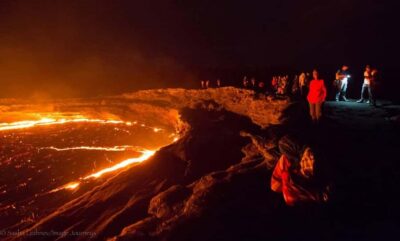
2-Night 3-Day Danakil Depression Tour without Flights
Read our review →
5 DAYS Axum, Lalibela, Tigray churches and Danakil
Read our review →Browse the lists this tour appears in