
Reviewed · SIMIEN MOUNTAINS TREKKING
4 Days Trekking to Simien Mountain National Park
This 4-day trek into Simien Mountains National Park is interesting because you are not just walking for views. You are moving through some of Ethiopia’s biggest altitude country, where giant lobelia fields, sheer escarpment edges, and the high peaks of the Simien range are all part of the same story. I like how the route ties together national-park wilderness and real local life. I also like the small-group feel, with support that keeps the days moving without chaos.
Two things I especially like: first, the chance to see gelada baboons early on, and then track the scenery as it gets more dramatic, day by day. Second, the human side of the trek, like stopping for a traditional coffee ceremony in Gich village, gives you a breather that feels connected to the landscape you are walking through.
One possible drawback to plan around is altitude. The trek is rated for moderate physical fitness, but the higher points can still feel like work, especially on summit days. Also, this is a weather-dependent trek, so conditions can affect what is comfortable and what is possible.
Key highlights you will feel on the trail
- Small group limit (max 8 travelers), which helps you keep pace without getting lost in a crowd
- Gondar pickup and return plus a 100 km drive to Debark to start the trek properly
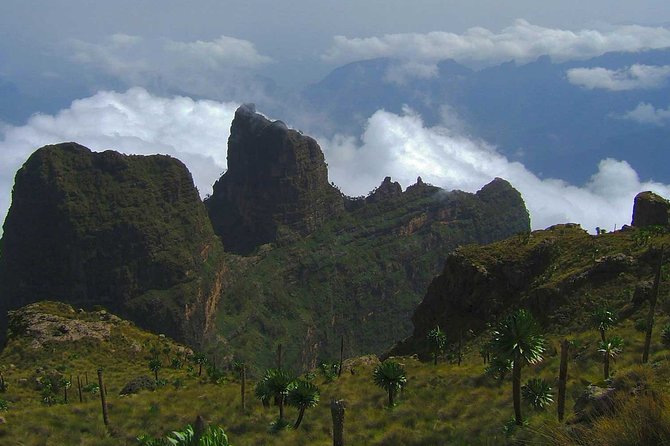
- Giant lobelia fields and close views around Imet-Gogo cliffs
- Jinbar River waterfall plunging 500 m, plus lunch by the river
- Walia ibex mentioned as a key endemic wildlife highlight on the Buwahit day
- Named local leadership on the ground, with owner Solomon and guide Jon referenced for friendliness and flexibility
Simien Mountains in four days: what you are really signing up for
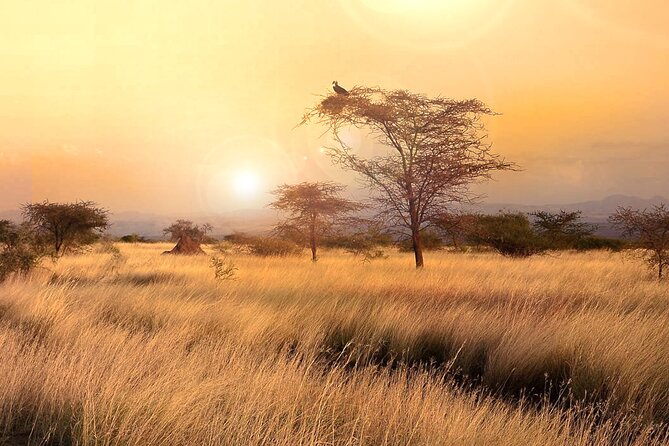
If you only know Simien Mountains from photos, this trip will recalibrate your expectations. Here, the big draw is not just height. It is the mix of cliffs, escarpments, wildlife, and highland plants that make the Simien range feel like its own world. The area became a national park in 1966, and the whole range earned UNESCO World Heritage status in 1978. That matters because you are trekking in protected terrain where the ecosystem is the point, not just the scenery.
The route is designed around a network of trails, and the emphasis is on quality paths and viewpoints. You will be walking through places where the scenery changes fast, from northern escarpment edges to river valleys and steep cliff sections. The Simien range includes at least a dozen peaks above 4,000 m, including Ras Dejen, Ethiopia’s highest peak, and Buwahit, the second-highest Simien summit you will target.
You are also trekking for more than photos. Bird life is a major theme here, and unique flora like the giant lobelia are part of why people come to Simien for natural history. Then there is the wildlife component. You might spot geladas early, and Walia ibex is a stated highlight later. It is not guaranteed wildlife, but it is a meaningful reason to be there rather than in another mountain range.
More days walking the Simiens:
- 6 Days tour Package (Simien Mountains, Lalibela, and Danakil Depression)
★ 5.0 · 32 reviews - Simien Mountains – 4 Days
★ 4.0 · 7 reviews - 2 Days Simien Mountains Trekking
★ 5.0 · 6 reviews
From Gondar to Debark: permits, scout, and your first escarpment viewpoints
Your day starts in Gondar, with pickup available from Gondar Airport or your hotel. The trek begins at 8:00 am, and the plan includes driving about 100 km from Gondar to park headquarters in Debark, which takes around two hours on a paved road. That first transfer is more than getting from A to B. It helps you begin the trip with less wasted time and sets you up to start with the right administrative setup.
At Debark headquarters, the team arranges permits and picks up a scout. You do not want to guess your way through protected areas, and having that part handled lets you focus on the walking. After permits are sorted, you drive for about another hour before your first day walk begins.
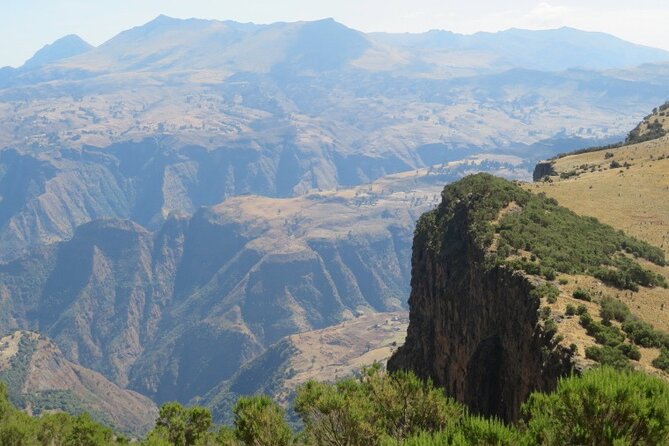
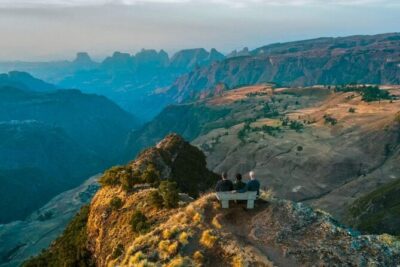
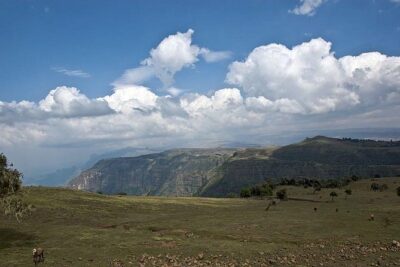
Day 1 is an intro hike along the northern edge of the escarpment. It is described as easy, and that is important. You want a gentle start because the Simien Mountains make elevation feel real fast. From these early viewpoints, you can look over the foothills and the plains of northern Ethiopia. It is a classic “get your bearings fast” kind of day, which is a big deal on a trek with altitude later.
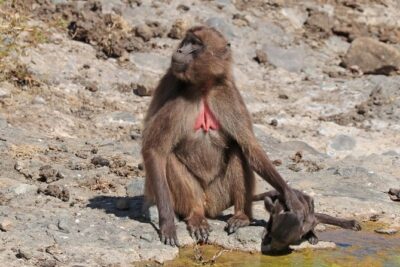
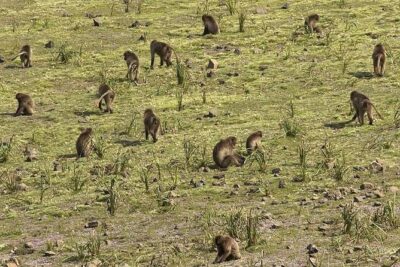
Wildlife also shows up early. You will encounter gelada baboons during this hike, and the plan includes an overnight in Sankaber. Even if you do not get repeated sightings, knowing you are likely to see geladas takes some of the “will we see anything?” stress off your mind.
Gich Abyss and the Jinbar River waterfall, then coffee in Gich village
Day 2 moves the trek forward in a way that feels like the route is gradually turning up the volume. You follow the northern escarpment eastward, then descend a bit into the Kaba Valley, and later climb back up toward dramatic cliff-country. One of the first “stop and stare” moments comes near Gich Abyss.
From a narrow ridge to a cliff viewpoint, you look out over the abyss toward the Simien foothills. This is where you start to understand why this region gets trekkers and naturalists talking. The walking is one part, but the vertical drop you see from the ridge is the other part. The plan also includes a major natural feature nearby: a large waterfall where the Jinbar River plunges 500 m into the abyss.
The day is structured so you build up, then earn your lunch. You proceed for about two hours and have lunch at the Jinbar River. After that, you walk through barley fields, which gives your eyes a break after cliff viewpoints. It also connects you with how local people farm highland edges, not just untouched wilderness.
Then you reach Gich village, described as idyllic, and you get a cultural pause in a hut for a traditional coffee ceremony. I like this kind of stop because it is not a performance. It is simply a way of understanding daily life in the highlands while you are already moving through the farming areas around the trails.
From Gich village, there is a short walk to Gich camp, where you stay for the night. That means you have a full day without exhausting yourself at the end. On a trek, that balance matters, especially as altitude starts to stack up in your body.
Giant lobelia fields and Imet-Gogo cliffs: where the trail turns steep and weird
Day 3 is the day that tends to separate casual hikers from true trekkers. You start at Gich camp and stroll through fields of giant lobelia, and that matters more than it sounds. Lobelia is not background scenery. It is a highland plant associated with specific elevations, so seeing it often means you are in the right ecological zone.
As you move on, you reach Imet-Gogo cliffs (3926 m). You spend time absorbing the views over mountain valleys below, and you also get close to strange-shaped domes in the distance. That description is a good clue for what you are seeing: volcanic-style terrain forms that look sculpted by forces you cannot control, but can stand in front of and understand.
Then the trek shifts. You descend into the Jinbahir River Valley, and you also get a different perspective on Imet-Gogo. The landscape can look like chunks of mountain have been blown away, which is exactly the kind of “geology lesson without a lecture” experience that makes Simien so compelling.
From there, the trail follows the edge of the escarpment, which is described as completely vertical for several hundred meters. That is not a casual walk. Even if you keep a steady pace, your mind knows you are near a sheer drop.
You climb to a summit of 4070 m. This is the point where altitude becomes a real factor in how you feel, even if you are otherwise fit. You will likely manage it better if you keep your pace slow and steady, take short breathing pauses, and keep focused on the next few steps rather than the whole day.
This is also one of those days where a guide helps your experience. A good guide can help you interpret what you see, manage breaks efficiently, and keep the route safe in changing conditions. In accounts of Ethio Target Tours, the leadership is described as friendly and flexible, which is useful because weather and footing can change quickly at high elevations.
More from Gondar to consider
- Day trek to Simien Mountain
★ 5.0 · 5 reviews - Simien Mountains National Park – 7 Day Trek
★ 5.0 · 5 reviews - 2 Nights 3 Days Trek to Semien Mountain
★ 5.0 · 4 reviews - Day trek to Simeien Mountains
★ 5.0 · 3 reviews
Buwahit (4430 m) and Walia ibex chances, with the Ras Dejen payoff
Day 4 is the payoff day. You climb Buwahit (4430 m), described as the second highest peak in the Simien Mountains. And yes, altitude is part of the point here. This is where you stop thinking of the trek as a scenic walk and start thinking of it as an achievement that you earn step by step.
The plan also highlights a specific endemic wildlife target: Walia ibex, a goat-family animal known from the Simien region. This is listed as a reward of the day, so it is worth keeping your eyes scanning cliffs and steep slopes. Wildlife sightings are never a promise, but when a trek plan is built around an endemic species, it means the route is chosen to make that chance realistic.
From Buwahit, you get scenic views that include the possibility of seeing Ras Dejen (4543 m), Ethiopia’s highest peak. Even if you do not get a direct view of the summit, you will still get a clear sense of how the high points relate. The Simien peaks are close enough in elevation that the map in your head starts to make sense.
After the peak experience, you go back down to Chenek camp, where a car is waiting. Then you drive back to Gondar, about 4 hours. This is the kind of finish that works well for most people. You get your high point, you descend while you still have daylight, and you do not spend the entire last day still “in trek mode.”
Price and logistics: why $275 can be good value here
At $275 per person for roughly 4 days, this trek can represent solid value, as long as you match expectations to what the plan includes. Park entry is listed as free in the daily admissions notes, which matters. Even when park admission is not the biggest cost compared to logistics, having it listed as free helps you avoid surprises.
The bigger value piece is that this is not a large expedition with a giant crew. It is a maximum of 8 travelers. That smaller group size can make the trek feel calmer. You are less likely to get split up, and it is easier for a guide and scout to manage the pace, breaks, and safety on narrow or steep sections.
You also get practical support baked into the plan. Pickup from Gondar Airport or your hotel helps if you do not want to figure out local transport on arrival day. The team drives you to Debark, handles permits at the park headquarters, and picks up a scout, which is exactly what you want before entering a protected area.
Another small but real convenience: you are issued a mobile ticket. In places where paperwork is a headache, having that modern step can save time.
What is not spelled out in your provided details is anything like whether meals, camping gear, or trekking poles are included. So treat the $275 as primarily covering the guided trek and core logistics described, and then budget separately if you know you will need extra gear or add-on meals.
Pace, fitness, and weather: the real success factors
This trek is aimed at travelers with moderate physical fitness and an age range of 12 to 70. That is a wide bracket, but altitude has its own rules. The plan includes summit climbs and steep escarpment edges, so “moderate fitness” here really means you can hike steadily for long stretches and handle elevation discomfort without panic.
The itinerary gives you some built-in pacing logic:
- Day 1 is an intro along the northern escarpment edge and is described as easy.
- Day 2 mixes viewpoints, a waterfall lunch stop, and village areas, so you keep moving without the hardest terrain all day.
- Day 3 includes giant lobelia fields, then the Imet-Gogo cliffs section, then the steep escarpment-edge walking and a summit at 4070 m.
- Day 4 includes Buwahit at 4430 m, followed by descent and a transfer back to Gondar.
Weather is another major factor. The trek requires good weather, and if it gets canceled due to poor conditions, you would be offered a different date or a full refund. Since you will be at high altitude and walking near steep drop-offs, you should assume conditions can change quickly. Build flexibility into your Ethiopia plan and keep your other bookings light.
Who this trek suits, and who should think twice
This trek suits you if you want:
- High-altitude trekking without needing a long expedition.
- A strong mix of natural history, from giant lobelia to endemic wildlife like Walia ibex.
- A route that uses viewpoints and river scenery, not just straight-line hiking.
- A small-group experience with local leadership, where Solomon and Jon are mentioned in accounts as friendly and knowledgeable, with flexibility when people ask for itinerary changes.
You might think twice if:
- Altitude worries you a lot, because this route includes summit efforts at high elevations.
- You want a totally easy hike. Even with Day 1 described as easy, Days 3 and 4 are more demanding.
- You dislike weather uncertainty, since the trip depends on good conditions.
Should you book this Simien trek with Ethio Target Tours?
I would book it if your priority is a focused 4-day trek in one of Africa’s most dramatic highland settings, with time spent in ecologically important terrain and a route that makes wildlife and plant life part of the experience. The value looks strong for what you get: small group size, pickup support, permits and scouting handled, and a trail plan that builds toward peak days.
I would skip or wait if altitude is a dealbreaker for you, or if your schedule cannot handle weather changes. Also, if you want a trip that is heavy on comfort details and light on exertion, this is not that kind of trek.
If you can hike steadily, keep a calm pace on summit days, and stay flexible with weather, this one has the ingredients for a trip you will remember for more than just the views.
FAQ
What time does the 4-day Simien trek start?
The experience start time is 8:00 am.
Where does the trek start and where does it end?
It starts at Gondar Airport in Gonder, Ethiopia, and it ends back at the same meeting point.
Is pickup from my hotel offered?
Yes, pickup is offered. The plan includes pickup from Gondar Airport or your hotel.
How big is the group?
The tour has a maximum of 8 travelers.
What age range is allowed?
The stated age range is 12 to 70.
What fitness level do I need?
You should have a moderate physical fitness level.
Are park admission tickets included?
Admission ticket is listed as free in the itinerary days provided.
What about weather, can the trek be canceled?
The trek requires good weather. If it is canceled due to poor weather, you will be offered a different date or a full refund.
What is the cancellation policy?
Free cancellation is available up to 24 hours in advance for a full refund. If you cancel less than 24 hours before the experience start time, the amount paid is not refunded.
More 4-Day Experiences in Gondar
- 4-Day Tour: Tigray Churches & Danakil Depression Adventure.
★ 5.0 · 11 reviews - Omo Valley 4days 3nights Cultural Tour
★ 5.0 · 7 reviews - Trekking in Ethiopia’s Lalibela Wollo Highland 4 Days / 3 Nights
★ 5.0 · 6 reviews - From Arba Minch: 4-Day Omo Valley Tribal Guided Tour
★ 5.0 · 5 reviews
More National Parks in Gondar
- 2 Days Wildlife Safari to Awash National Park
★ 4.5 · 21 reviews - 5 Days Tour to World Heritage-listed Harrar, Dire Dawa and Awash NATIONAL PARK
★ 4.5 · 10 reviews - Awash National Park Tours
★ 5.0 · 10 reviews - 2 Days Awash National Park Safari Tours
★ 5.0 · 9 reviews
Newly reviewed in Gondar
- Day trek to Simeien Mountains★ 5.0 · 3 reviews
- 3 Days Simien Mountains Trekking★ 5.0 · 3 reviews
- Gondar city Tour With Airport & Hotel Pick Up★ 5.0 · 3 reviews
- 2 Nights 3 Days Trek to Semien Mountain★ 5.0 · 4 reviews
- Day trek to Simien Mountain★ 5.0 · 5 reviews
- Simien Mountains National Park – 7 Day Trek★ 5.0 · 5 reviews
- 2 Days Simien Mountains Trekking★ 5.0 · 6 reviews
- Simien Mountains – 4 Days★ 4.0 · 7 reviews
Simien Mountains Trekking, compared.
12 Days SIMIEN MOUNTAIN-LALIBELA-DANAKIL-TIGRAY CHURCHES
Read our review →
6 Days tour Package (Simien Mountains, Lalibela, and Danakil Depression)
Read our review →
5-Day Northern Ethiopia Tour : 3D Simien Mountains Trek & Axum.
Read our review →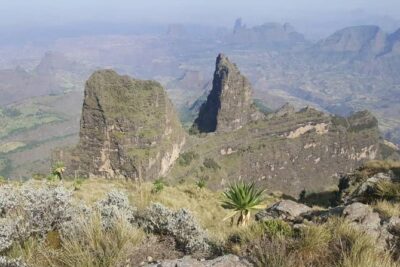
Northern Ethiopia & Trekking Simien Mountains , 10 Days
Read our review →Browse the lists this tour appears in