
Reviewed · DANAKIL DEPRESSION TOURS
2 Days Dallol Trip
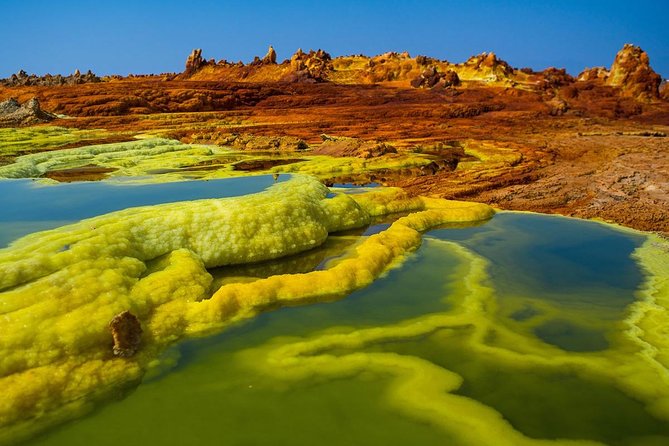
Danakil’s a rare kind of trip. You’re driving into a place known for wild hydro-thermal colors and very acidic spring activity, where the ground looks chemically painted. In just two days, you get a full hit of surreal scenery plus real working life at the salt fields.
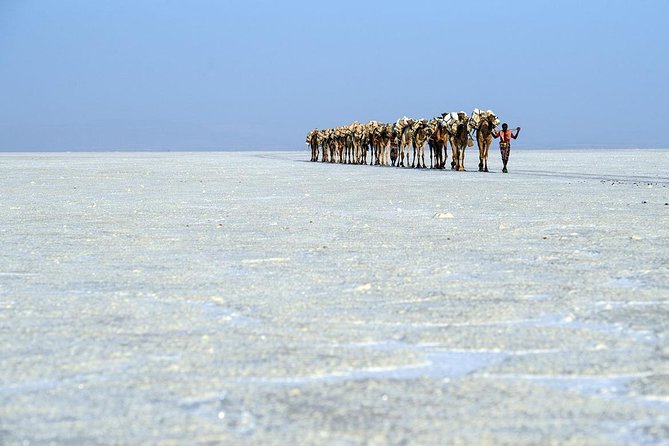
What I love most is how quickly the scenery changes. One day you’re on the way through Erta Ale country and desert stops, then you’re watching salt workers cut rectangular blocks and load them onto camels. I also really like the scale of the camel caravans, because you’re not just seeing them, you’re following the rhythm of how salt moves across the Afar region.
One drawback to plan for: this trip asks for a moderate fitness level and it’s long, dusty, and remote. Even with an air-conditioned vehicle, you will still be outside, walking, and standing in harsh conditions where comfort takes a back seat.
Key highlights worth knowing
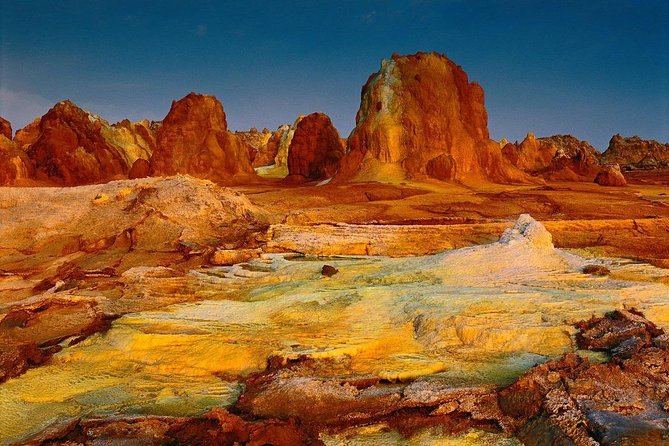
- Acid-spring territory at Dallol, including an excursion to a site about 116 meters below sea level
- Ragad (Asebo) salt mining firsthand, with salt breaking, cutting, and camel loading you can watch up close
- A day built around camel caravans, from what you see on the roads to following the activity on the salt routes
- Erta Ale country on Day 1, including a camel caravan stop around Berhale and time at Camp Hamedela
- Small-group feel, with a maximum of 15 travelers plus scout and police service
Danakil in Two Days: Why Dallol Feels Like Another Planet
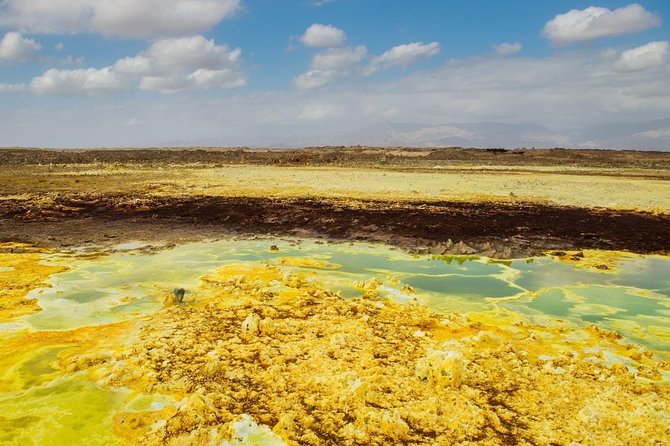
If you like travel that feels physical, not just scenic, this is your kind of trip. Dallol is famous because it’s a terrestrial hydro-thermal system with mineral patterns that look impossible, plus acidic fluids that are part of what makes the place so strange. In other words, you’re not visiting a typical postcard viewpoint. You’re visiting a functioning chemical landscape.
You also get a mix that’s hard to find in a short itinerary. You’ll see the intense geology at Dallol, but you’ll also see how people work the salt. That balance is what makes the experience stick. It’s not only nature doing the talking.
And I like that the operation is set up for the reality of this area. You’re not on your own. You have a local guide, camping equipment, and vehicle support, plus scout and police service for extra security in a remote, high-stress region.
Other descents into the Danakil:
- Danakil 3 days tour
★ 5.0 · 10 reviews - 3 days tour Danakil Depression (Dallol & Erta Ale)
★ 4.0 · 5 reviews - 12 Days SIMIEN MOUNTAIN-LALIBELA-DANAKIL-TIGRAY CHURCHES
★ 5.0 · 45 reviews
From Mek’ele to Camp Hamedela: Erta Ale Country on Day 1
Your day starts at 9:00 am, and you’ll use an air-conditioned vehicle for the long stretches. Expect real driving time, because this area is far from convenience stores and short breaks. You’re moving through the Danakil Depression region where roads and settlements are spaced out.
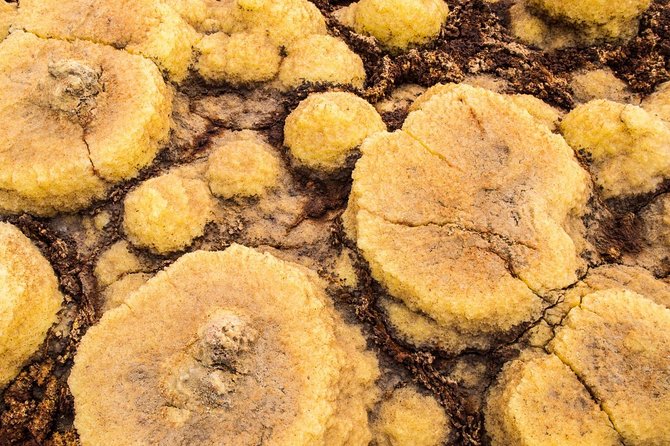
The first big piece of Day 1 is the approach into the area around Erta Ale. This is where people often say the Danakil Depression effectively begins. It’s one of the most inhospitable regions on earth, but the visuals are hard to ignore: sulfur springs, mineral colors, and wide desert emptiness that makes everything else feel tiny.
Along the way, you’ll pass through Berhale, a small town that acts like a stop before camel caravans head toward the northern highlands. This is where you’ll notice how common salt trade is in the region. You’ll see long camel caravans traveling to the salt mine and also leaving Danakil with camels carrying loaded salt.
Then you’ll move on to Camp Hamedela, described as a better village area with a population around 500 people. That detail matters. You’re not just sleeping somewhere generic. You’re being hosted near a real community stop before the deeper salt and thermal sites the next day.
Day 1 ends with dinner included and time to settle into camp. If your trip schedule lines up with the common evening rhythm here, you may get a campfire moment connected to nearby water activity at Afdera lake, plus dinner soup. It’s the kind of down time that helps you process how intense the day was.
Ragad (Asebo) Salt Mining: Watching Salt Become a Trade
Morning on Day 2 is when the trip really turns from “scenery” into “work in motion.” You’ll drive to Ragad (Asebo), where locals mine salt. This is the part that many people remember because it’s active and practical.
You’ll be able to observe the process, including salt breaking from the ground, then cutting it into rectangular pieces. After that, you’ll see the loading onto camels. It’s simple, direct, and it shows how labor turns the raw resource into something that can travel.
What makes this valuable is that you’re seeing the workflow, not just a finished product. It helps you connect the bright, mineral-rich places to the human effort that keeps the salt trade moving. You also get a sense for why camel caravans matter here: in this terrain, camels are not a novelty. They are the transport system.
There’s also a lesson in timing. If you arrive while work is in full rhythm, the views feel more alive. If you arrive during a slower moment, you’ll still get the context, but the action may be less nonstop. Either way, I’d treat this stop as your chance to look, watch, and ask your guide about what you’re seeing.
Dallol Excursion (116 Meters Below Sea Level) and Lake Assal
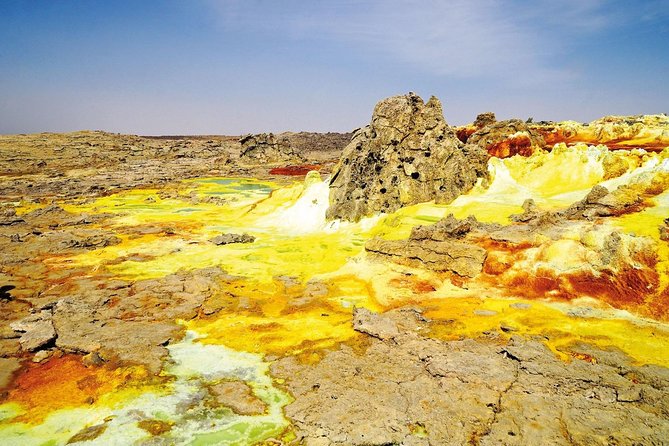
After Ragad, you drive ahead to Dallol and then connect onward to Lake Assal as part of the day’s route. The Dallol portion is the headline, and for good reason. Dallol sits about 116 meters below sea level, and the reason people react strongly is the combination of volcanic influence, mineral patterns, and the role of acidic fluids.
You’ll take an excursion into Dallol, and your guide will help you interpret what you’re seeing on the ground. Even if you do not catch every technical detail, you will still grasp the “why” visually. The terrain looks like it’s been sculpted by chemical forces, not by normal erosion or typical weather patterns. That’s the power of visiting with local guidance, because they can point out the differences you might otherwise miss.
Then there’s Lake Assal. You’ll visit it as part of the day plan, and it rounds out the experience by adding a different kind of dryness and mineral presence. This is one of those “putting two clues together” stops. Dallol gives you the chemical weirdness, and Lake Assal helps you see how the larger region’s conditions shape everything.
One thing to keep in mind: Dallol is known for very acidic fluids discharging from hydro-thermal springs. That’s not a reason to panic, but it is a reason to stay close to your guide, follow safety instructions, and avoid touching surfaces just because you’re curious. Your goal is to see and photograph, not to test the chemistry with your hands.
More from Mekele to consider
- Two Days Tigray Churches Trip
★ 5.0 · 10 reviews
Camel Caravans and an Afar Walk: Real Movement, Not a Set
The day doesn’t end at thermal sites. You’ll also follow camel caravans and walk with Afar people. This part matters because it’s where the region shifts from “spectacle” to “lived reality.”
Following caravans gives you a sense for direction and distance. You start to understand that salt is not stuck in a quarry. It becomes a supply chain, and the camels are the moving link. When you’ve watched salt mining happen hours earlier, this feels like the second half of the story.
Walking with Afar people also helps you see how the environment and the work are connected. You’re not just looking for cool photos. You’re in the walking pace of the region, and that changes how you experience the terrain. The trip can feel more human when you share a route at the speed local life uses.
From the reviews, one theme is how professional the drivers and guides are, and that shows up most clearly in moments like these. When the environment is harsh and the area is remote, you want someone who can keep the schedule moving safely and explain what you’re seeing in plain terms.
What You Get for $307.70: Value and Comfort in a Remote Place
The price is $307.70 per person for a two-day trip. On the surface, that sounds like a “special expedition” cost, and in a sense it is. But the value is in what you’re not paying for separately.
Included items cover the core needs for this remote itinerary:
- Dinner and breakfast, plus two lunches
- Air-conditioned vehicle transport
- Bottled water during the trip
- All fees and taxes
- Local guide service
- Camping equipment
- Scout and police service
- Admission tickets included
That “admission tickets included” line is important. In some tours, you pay extra once you’re already committed. Here, the pricing approach is clearer: you know entry costs and core services are baked into the fee.
Also, camping equipment being included is a real value. You can travel lighter and avoid last-minute gear shopping. And having scout and police service listed signals that the operator takes local safety seriously in remote areas.
Comfort wise, don’t expect luxury. You do get an air-conditioned vehicle, and you have dinner and breakfast sorted. But the overall tone is adventure travel, not resort comfort. If you’re going because you want to see strange mineral worlds and how salt trade works, the tradeoff is worth it.
Practical Packing Tips for a Harsh, Acid-Known Area
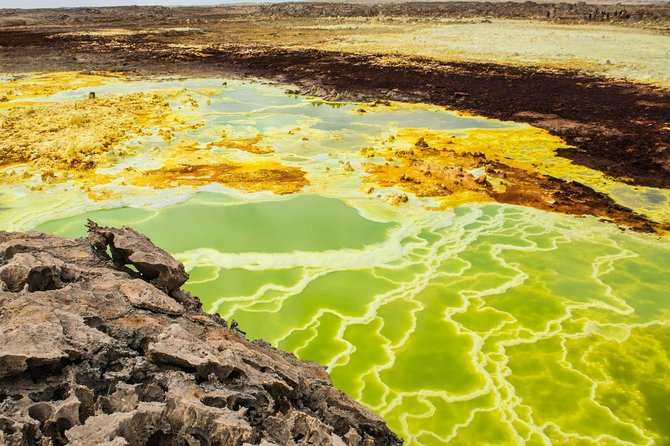
Because Dallol is known for acidic fluids, treat this as a trip where you should protect yourself from the environment rather than treating it like a casual stroll.
Pack for dry heat and dust. Even with air-conditioned transport, the outdoor segments can be intense. I suggest you plan on:
- Sun protection that you can reapply easily
- Clothes that handle dust and heat
- Sturdy footwear for walking on uneven ground
- A water habit, since bottled water is provided but you should still manage your intake
Also, keep your expectations realistic about walking. The trip notes a moderate physical fitness level. That doesn’t mean “athlete only,” but it does mean you should be comfortable moving and standing for periods while the day stays on schedule.
Finally, bring a camera strategy. This kind of terrain is photo-forward, but you will have lots of bright mineral colors and harsh light. Plan for a mix of wide shots and close details, and listen to your guide when they suggest where to stand or when to move to avoid getting too close to active areas.
Who Should Book This Dallol Trip, and Who Should Skip It
This is a strong match for you if you:
- Want a short trip with a big sense of place, including Dallol and salt mining
- Like tours where the work behind the scenery matters
- Prefer a small group experience, with a max of 15 travelers
It’s also a good choice if you value organization. The reviews emphasize professional drivers and helpful guides, and the trip includes scout and police service plus camping equipment. That reduces the “Are we handling this right?” stress that can show up in remote itineraries.
You might want to skip or think twice if you:
- Get uncomfortable with long desert days and outdoor walking
- Are not up for a moderate physical fitness requirement
- Expect a fully paved road pace and frequent comfort stops
If you’re the type of traveler who enjoys observing real human work and not just taking pictures, you’ll probably feel at home here.
Should You Book the 2 Days Dallol Trip from Mek’ele?
Book it if your travel style is curiosity plus grit. This two-day format gives you Dallol’s chemical surrealism, the salt mining process at Ragad (Asebo), and the ongoing camel caravans that connect it all. The cost feels reasonable for what’s included: meals, transport, guides, admission tickets, and camping support.
Don’t book it if you want a relaxing, easy pace. This is remote, bright, and physically noticeable. But if you come prepared and you’re excited by the idea of seeing a place that looks chemically altered and still functioning as part of local trade, you’ll likely feel you got your money’s worth.
FAQ
Where does the 2 Days Dallol Trip start?
The tour starts in Mek’ele, with a 9:00 am start time. Pickup is offered.
How long is the trip?
It runs for 2 days, approximately.
What is the price per person?
The price is $307.70 per person.
What does the tour include?
It includes dinner, breakfast, lunch (2), air-conditioned vehicle, bottled water, local guide service, camping equipment, scout and police service, all fees and taxes, and admission tickets.
Are admission tickets included?
Yes, admission tickets are included.
Do I camp during the trip?
Camping equipment is included, and Day 1 includes Camp Hamedela.
Is transportation provided?
Yes, the trip includes an air-conditioned vehicle.
What fitness level do I need?
The tour notes a moderate physical fitness level.
How big are the groups?
The maximum group size is 15 travelers.
What is the cancellation policy?
Free cancellation is available. You can cancel up to 24 hours before the experience’s start time for a full refund. If you cancel less than 24 hours before, the amount paid is not refunded.
Newly reviewed in Mekele
- 2 days Tigray Church★ 5.0 · 3 reviews
- 3 days tour Danakil Depression (Dallol & Erta Ale)★ 4.0 · 5 reviews
- Two Days Tigray Churches Trip★ 5.0 · 10 reviews
- Danakil 3 days tour★ 5.0 · 10 reviews
Danakil Depression Tours, compared.
12 Days SIMIEN MOUNTAIN-LALIBELA-DANAKIL-TIGRAY CHURCHES
Read our review →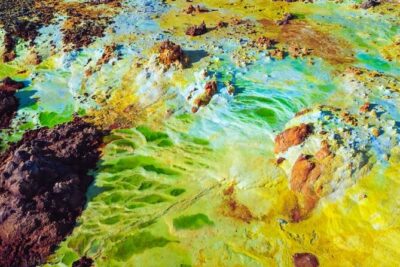
3 Day Danakil Depression Ertale and Dallol Tours
Read our review →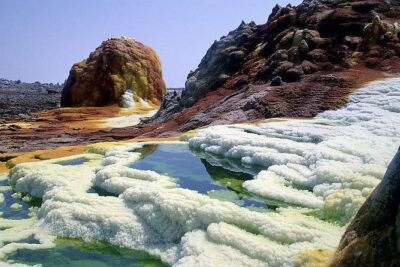
5 DAYS Lalibela, Axum, Tigray churches and Danakil
Read our review →3 Days Danakil Depression Tour from Semera City
Read our review →
6 Days tour Package (Simien Mountains, Lalibela, and Danakil Depression)
Read our review →
2-Night 3-Day Danakil Depression Tour without Flights
Read our review →
5 DAYS Axum, Lalibela, Tigray churches and Danakil
Read our review →Browse the lists this tour appears in