
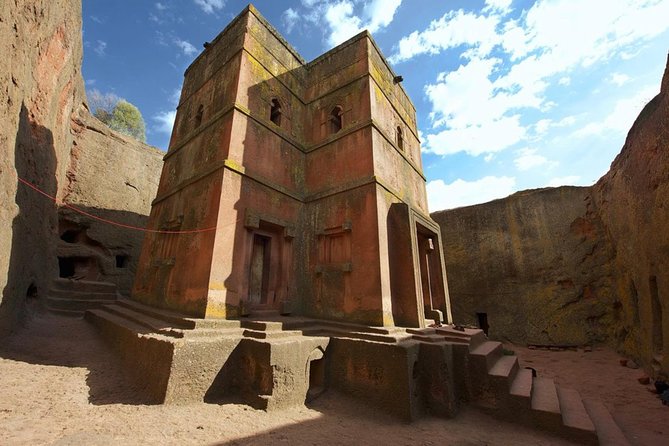
Reviewed · HISTORICAL TOURS
Historical-tour Lalibela Gonder & Bahir Dar
Northern Ethiopia is a geography lesson in human ambition. You’ll move from Lake Tana monasteries and Gondar’s royal compounds to Lalibela’s famous rock-hewn churches, all in one focused run. It’s interesting because it feels like one big timeline, not disconnected sightseeing.
I especially like the way this trip handles the logistics: domestic flights cut down on long travel days, and pickup is offered from Bole Airport. I also really like the mix of “wow” sites and “slow down” moments, like a boat ride at Lake Tana plus time to actually look at church ceilings and stone details in Lalibela. The payoff is you get both the landmark buildings and the setting around them.
One possible consideration: this is a history-heavy itinerary with driving time (including a full day drive toward Lalibela), and church interiors can mean stairs and uneven ground. If you prefer a lighter pace, you’ll want to plan for rest and moderate walking.
Key highlights worth noting
- Lake Tana boat trip to monastery islands, capped with a sunset view over the lake
- Gondar Royal Enclosure with six castles, often described as the only Camelot in Africa
- Fasiledes Pool and Timket use of the pool for Epiphany celebrations today
- Debre Birhan Silassie Church ceiling viewing, famous for its painted ceiling
- Lalibela rock-hewn churches in groups (Earthly Jerusalem in two morning groups, then St. George)
- Private tour feel, so the schedule is built around your group instead of a crowd
The value equation: what you actually get for the price
At $1,083.21 per person for about 5 days, the cost only makes sense if the package is doing its job. Here, it is. You are paying for more than “transport between places.” You’re paying for a route that links three of Northern Ethiopia’s most important historical zones, plus domestic flights, hotel overnights in each hub, meals (including dinner), and guided access to major sights.
To think about value the practical way, ask yourself: how much of your trip would you lose if you self-organized? If you plan flights, hotels, local transfers, site tickets, and guiding separately, costs and time usually balloon. This itinerary is designed to keep those pieces moving in the same direction, with admissions listed as included on key days and marked free on others.
Also, you’ll notice the booking timing is not last-minute by default. On average, this is booked about 5 days in advance. That suggests the company expects planning time to lock in flights and the guide schedule, which matters for a route like this where missed connections can wreck the flow.
More from Addis Ababa to consider
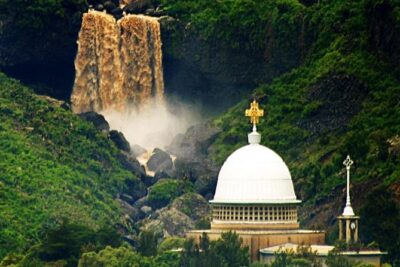
- Day Trip From Addis Ababa See Historical Monastery,Stunning Nature,Animals,Birds
★ 5.0 · 303 reviews - Hidden Treasures of Addis Ababa – Food, Culture and History Tour
★ 5.0 · 57 reviews - Northern Ethiopia Historic Route
★ 5.0 · 12 reviews
Day 1 in Bahir Dar and Lake Tana: monasteries plus a real sense of place
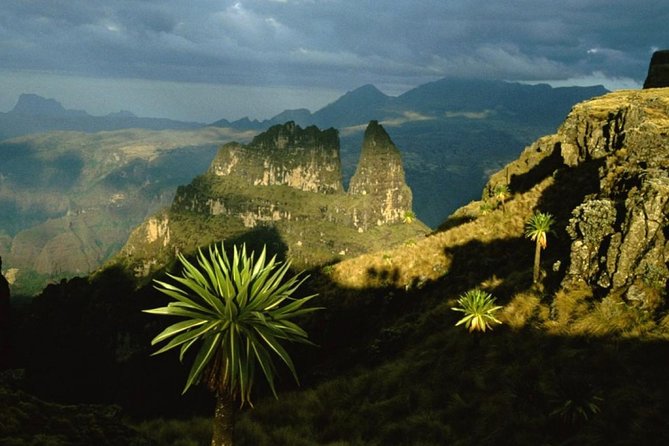
Your day begins in Addis Ababa, with pickup offered and a start time at Bole Airport at 6:00 am. From there, the itinerary funnels you toward Bahir Dar. After check-in at the Tana Hotel, you do something that makes Northern Ethiopia feel different right away: a boat trip on Lake Tana, the largest lake in Ethiopia.
What I like about the Lake Tana portion is that it’s not just a ride for photos. The boat time is built around monastery islands, specifically Kidane Mihiret and Azwa Mariam. Those names matter because they signal you’re visiting religious sites in their island context, not just a dock stop.
Then you finish the day with a spectacular sunset view over the lake. That matters more than it sounds. After a travel day, a sunset is a clean way to reset your brain and let the scale of the water sink in.
Practical note: this is an early start and then a boat day. It’s smart to dress in layers for the lake air and keep your sunscreen handy.
Gondar’s royal story: castles, Fasiledes Pool, and that famous ceiling
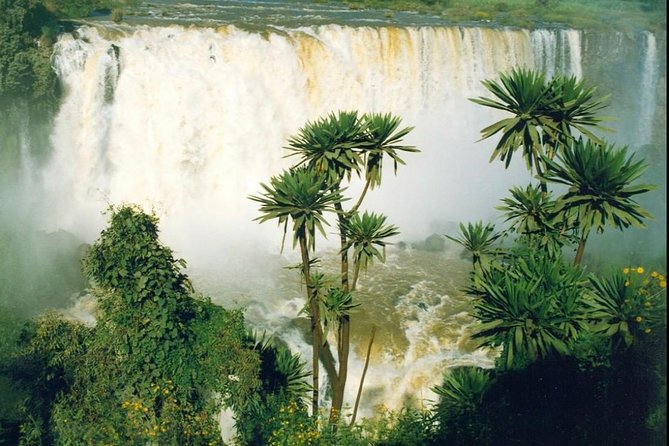
Day 2 shifts from water to stone and power. After breakfast, you drive about 180 km north to Gondar, via an asphalt road that passes through rural villages. That “between places” part is not filler. It’s where you get quick insight into the Amhara culture, and it breaks up the day so it doesn’t feel like you’re just watching out a window for hours.
After you settle into the Goha Hotel and have lunch, the focus turns to Gondar’s royal compound, the Royal Enclosure, which includes six castles. It is often described as the only Camelot in Africa, and the comparison is useful. You’re seeing a palace-like concentration of power, not a single isolated building.
Here’s what to look for while you walk:
- The castle of King Fasiledes, the anchor of the complex
- Fasiledes Pool, which is still used for Timket celebrations (Epiphany), so the site is alive, not just museum-style
Then there’s a church stop that is pure visual reward: Debre Birhan Silassie Church, known for having the most famous ceiling in Ethiopia (as this itinerary describes it). Even if you don’t catch every detail, you’ll feel why people remember it. Churches like this are about what happens when light hits painted surfaces and stone frames.
This day is a good fit if you like royal history and architecture. If you’re more into nature or casual strolling, Gondar can feel heavy. Still, the sites are compact enough that you’re not constantly on the move.
The long drive to Lalibela: why the journey is part of the experience
Day 3 is a full day going toward Lalibela, described as about 10 hours of driving. You’ll pass through small villages along the way, and you’re heading from the Gondar area to the rock-hewn church city.
This is the part of the trip where you should set your expectations. A 10-hour day on the road means you’ll want:
- comfortable clothes
- water
- a plan for rest stops
But don’t treat it like a necessary nuisance. On routes like this, the views and village scenery are part of the context for why Lalibela matters. You’re moving from one historical center to another, and the way people live along the route helps explain how these places fit into the modern country, not just a postcard version of the past.
You’ll overnight in Lalibela after arriving and settling into your Lalibela hotel.
Something steadier after Addis Ababa:
- Full Day Tour of Addis Ababa with Hotel Pickup and Drop-off
★ 5.0 · 430 reviews - Taste of Ethiopia
★ 5.0 · 406 reviews - Addis Ababa: Debre Libanos, Blue Nile Gorge, and Cave Tour
★ 4.5 · 256 reviews - Addis Ababa Guided City Tour With Airport & Hotel Pick Up
★ 5.0 · 237 reviews
Lalibela Day 4: the rock-hewn churches, arranged like an interpretive map
Day 4 is the heart of the whole trip. You visit 11 rock-hewn churches of Lalibela, and the day is organized in groups that are tied to symbolism.
Morning starts with the 1st and 2nd groups of rock-hewn churches. These are described as representing Earthly Jerusalem. Even without a lecture, this framing helps you understand why your guide will likely point out certain layout and orientation features as you move.
After lunch, you tackle the 3rd group, described as being symbolized by the Arc of Noah, and this group includes St. George. That naming gives you an easy way to keep track of what you’re seeing, because you’re not just wandering among churches. You’re following a designed sequence that connects the complex to stories and meaning.
How to get the most out of this day:
- Take your time at each church entrance and imagine the scale. Rock-hewn spaces can surprise you, because they feel both carved and sheltered at the same time.
- If you like photography, double-check whether photograph and camera fees apply. They are listed as not included, so plan for possible on-site charges if you intend to shoot extensively.
This is the day that many people remember most clearly, and it’s also the day that can feel physically demanding, depending on how much time you spend climbing stairs, walking uneven stone, and moving between compounds.
Day 5 back to Addis Ababa: flights that close the loop
On Day 5, you start in the morning and fly back to Addis Ababa. The itinerary notes domestic flights are included for Lalibela to Addis Ababa, and after landing you get a transfer to Bole International Airport.
The timing is described as about 8 hours, including the flight and transfer. The itinerary also mentions admiring the beauty of the Northern part of Ethiopia from the air. For many people, this final flight is a nice way to connect the dots after days of driving and walking.
From a practical standpoint, flying out is a smart choice. It avoids an extra long drive day and helps keep your schedule intact after the emotional high of Lalibela.
Group size and private-tour feel: how that changes the experience

This is described as a private tour/activity, with only your group participating. That usually changes the experience in three ways.
First, it makes the day feel more flexible. You can ask questions without trying to be heard over a big bus group.
Second, it makes pacing easier. Sites like Gondar and Lalibela reward slow looking, and a private set-up helps avoid the scramble feeling.
Third, it likely reduces waiting time. You’re not drifting behind strangers who stop for snacks every 12 minutes.
You do still have a schedule, though. The itinerary has a clear structure by day and by site, so your “flexibility” is within those boundaries.
What to pack and how to plan for comfort
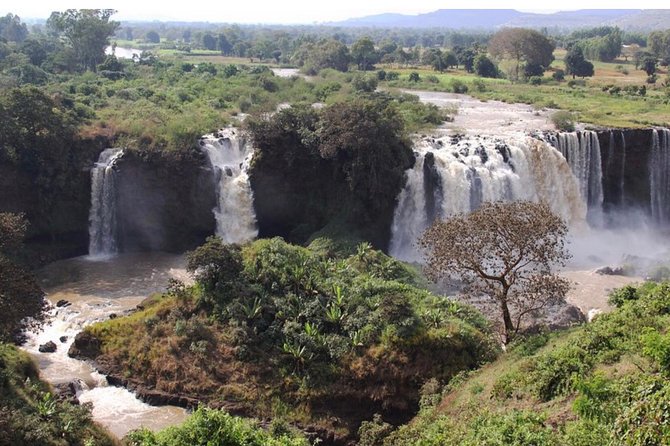
The tour lists a moderate physical fitness level requirement. I take that as: you’ll likely walk on uneven ground, climb stairs in churches, and handle long driving days without expecting it to be easy.
A smart packing approach:
- Comfortable walking shoes with good grip
- Light layers for daytime and a warmer layer for early morning and evenings
- Sun protection, since lake and church courtyards can be bright
- A plan for potential camera fees, since those are not included
Also, keep your phone charged for a mobile ticket. The tour offers a mobile ticket, which is convenient, but it’s still smart to have a backup plan if your battery gets low.
Best for who, and who should rethink
I think this tour is a strong match if you want:
- major historical sites in a tight time window
- a route that links Lake Tana, Gondar, and Lalibela instead of treating them as separate trips
- private guiding so you can ask questions about architecture and meaning, not just “what is this”
You might want to rethink the fit if:
- you dislike long road travel days (Day 3 includes about 10 hours of driving)
- you want a lighter pace with more downtime between major stops
- you have very limited mobility, since churches often require walking and stairs and the itinerary calls for moderate fitness
Should you book this Northern Ethiopia historical route?
If your goal is to see Ethiopia’s Northern powerhouses of history in one coordinated trip, I’d lean yes. This itinerary is built around three locations that connect thematically: monasteries and sacred lake culture, royal Gondar architecture, and Lalibela’s rock-hewn churches with strong symbolic groupings.
The booking decision comes down to your tolerance for a busy schedule and travel time. If you’re okay with a moderate fitness level and you like guided context, you’re getting a lot for your money: domestic flights, multiple hotel nights, meals including dinner, and admissions that are specifically tied to the day’s main sites.
If you want maximum comfort and minimal driving, consider a shorter or more spread-out plan. But if you’re excited by the idea of walking from one historical era to the next, this is a route that makes that possible.
FAQ
How long is the Northern Ethiopia historical tour?
It runs for about 5 days.
What is the meeting point and start time?
The tour starts at Bole Airport, Addis Ababa, Ethiopia, at 6:00 am.
Which domestic flights are included?
Domestic flights are included for Addis Ababa to Bahir Dar and Lalibela to Addis Ababa.
Are entrance tickets included for the main sites?
Some admissions are included and others are listed as free. Lake Tana monasteries are marked as included, and the Rock-Hewn Churches of Lalibela day is marked as included, while other days are marked free.
What meals are included?
Dinner is included, and breakfast is included for 3 mornings.
Is this tour private, and what is the cancellation window?
Yes, it’s a private tour where only your group participates. You can cancel up to 24 hours in advance for a full refund.
Newly reviewed in Addis Ababa
- Addis Ababa City Tour★ 4.5 · 3 reviews
- 2 days trek around Lalibela★ 5.0 · 3 reviews
- Day Trip Around Addis Ababa★ 5.0 · 3 reviews
- Full Day Addis Ababa City Tour with Hotel Pick Up And Drop Off★ 5.0 · 3 reviews
- Northern Ethiopia (Historic route)★ 5.0 · 3 reviews
- Addis Layover Tour of Mercato With Airport pick up & drop off★ 5.0 · 3 reviews
- Day Tours around Addis Abeba, Melka Kunture and Adadi Mariam★ 5.0 · 3 reviews
- Day Trip From Addis Ababa To Debre Ziet★ 5.0 · 3 reviews
Historical Tours, compared.
Day Trip From Addis Ababa See Historical Monastery,Stunning Nature,Animals,Birds
Read our review →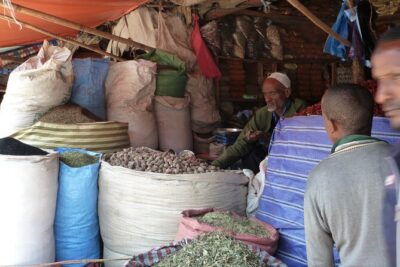
Hidden Treasures of Addis Ababa – Food, Culture and History Tour
Read our review →
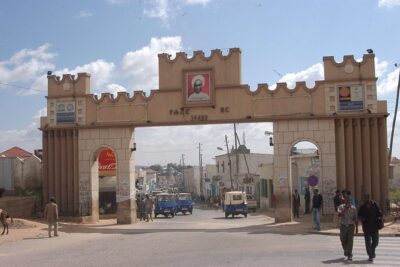
5 Days Tour to World Heritage-listed Harrar, Dire Dawa and Awash NATIONAL PARK
Read our review →
DAY TRIP TO THE UNESCO HERITAGE SITE TIYA & Melka Kunture
Read our review →
Experience a Cultural and Historical Journey through Addis Ababa
Read our review →
Historical tours – in five days, Addis Ababa, Axum, Laliebla and Gonder
Read our review →
city tour of Addis Ababa ( history ,culture , food and more)
Read our review →Browse the lists this tour appears in